

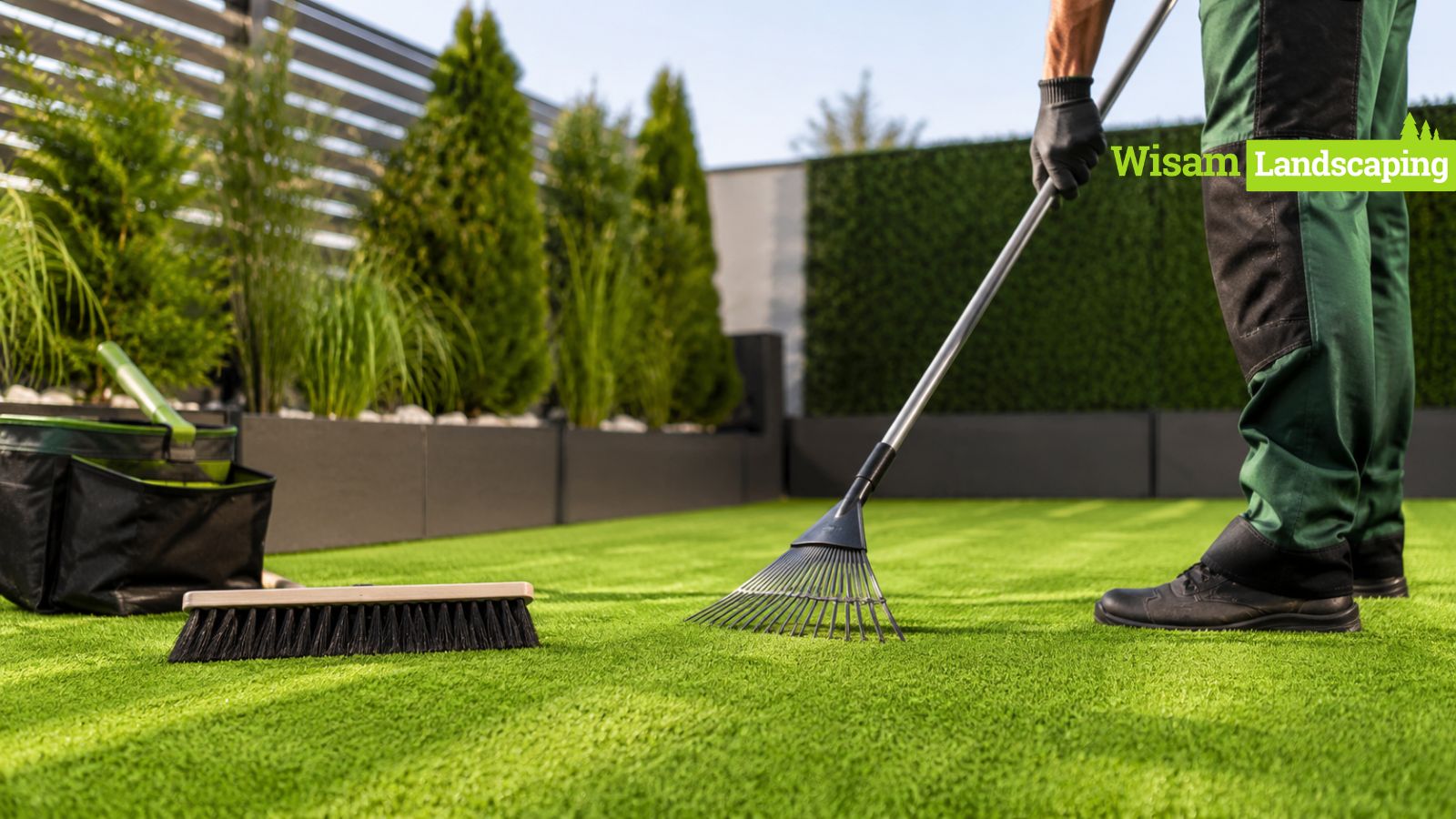
Artificial grass is often chosen because it eliminates many of the chores associated with natural grass, but it is not completely maintenance-free. Dust, leaves, pet waste, weeds, spills and seasonal debris can gradually affect the appearance and performance of synthetic turf. A sensible Artificial Grass Maintenance routine helps protect the surface, maintain drainage and keep an outdoor area looking fresh for years. This Artificial Grass Maintenance Guide explains practical ways homeowners can care for synthetic turf, avoid common mistakes and deal with everyday problems before they become expensive repairs.
Synthetic turf is designed to withstand regular foot traffic and changing weather, but its long-term appearance depends on how it is used and maintained. Unlike natural lawn, artificial grass does not need mowing, watering or fertilising. However, its fibres still collect airborne dust, leaves and organic matter, while the infill can become compacted in high-use areas.
Good maintenance is therefore less about constant work and more about performing the right tasks at sensible intervals. A backyard that receives little traffic may need only occasional cleaning, while a family lawn with children, pets and outdoor furniture will require more attention. Understanding this difference helps homeowners create a maintenance routine that is practical rather than unnecessarily time-consuming.
One of the biggest misconceptions about Artificial Grass is that installation means you can completely forget about the lawn. In reality, basic maintenance protects the investment and keeps the surface comfortable and attractive.
A typical routine may include:
These tasks are generally straightforward, especially when they are completed regularly. The main advantage is that small maintenance jobs are easier to manage than a neglected lawn that requires extensive cleaning or corrective work.
Lawn Cleaning is one of the simplest ways to preserve the appearance of synthetic turf. Outdoor lawns naturally collect dust, pollen, leaves, small branches and other debris. If organic material is allowed to remain on the surface for long periods, it can become embedded between the turf fibres and create an untidy appearance.
For routine cleaning, use a soft-bristled outdoor broom or a suitable synthetic-turf brush to remove loose debris. Work in different directions rather than repeatedly brushing the fibres in one direction. This can help lift flattened blades and distribute wear more evenly.
For dust and light dirt, rinsing the turf with clean water can also help. Pay particular attention to areas underneath trees, beside garden beds and near outdoor entertaining spaces because these locations often collect more debris.
There is no universal schedule because usage varies. A low-traffic decorative lawn may need light cleaning every few weeks, while a busy family Backyard may benefit from weekly attention during periods of heavy use.
Weather also matters. Windy conditions can bring more leaves and dust, while autumn may create a larger volume of organic debris. After storms, inspect the surface and remove fallen branches or other material that could interfere with drainage.
Turf fibres can become flattened in areas where people regularly walk, children play or outdoor furniture sits. This does not necessarily mean the material has failed. In many cases, brushing can help the fibres return to a more upright position.
Use a brush designed for artificial turf rather than an overly aggressive metal rake or unsuitable garden tool. Brush against the natural direction of the fibres using controlled movements. Concentrate on high-traffic areas without repeatedly overworking the same section.
If a chair, table or planter has been sitting in one location for a long period, moving it occasionally can also reduce permanent pressure on the turf. Heavy objects should be handled carefully to avoid damaging the backing or creating depressions.
For households with dogs or other pets, Pet-Friendly Turf can make outdoor maintenance easier, but pet use changes the cleaning routine. Solid waste should be removed promptly rather than left on the surface. Allowing organic material to remain can create odours and make cleaning more difficult.
For urine-prone areas, regular rinsing can help remove residue and maintain freshness. Where odours persist, homeowners should use a cleaning product specifically suitable for artificial turf and follow the manufacturer’s instructions. Avoid strong household chemicals simply because they are effective on other surfaces; some products can affect fibres, backing or infill.
A practical approach is to identify the areas pets use most often and give them additional attention instead of treating the entire lawn with unnecessary cleaning products.
Artificial grass significantly reduces lawn weeds, but it does not guarantee that weeds will never appear. Weed growth can occur around perimeter edges, seams, garden beds and areas where organic debris accumulates.
Weed Prevention begins with keeping the surface clear and checking boundaries periodically. Leaves, soil and organic material can provide conditions that encourage unwanted growth, particularly around the edges of the installation.
If you notice weeds, remove them carefully and investigate why they are appearing. Do not automatically apply a strong chemical weed killer without checking whether it is compatible with the turf, infill and surrounding landscaping. In some cases, recurring weeds may indicate an installation or drainage issue that needs professional assessment.
Synthetic Turf does not create a completely sealed environment. Depending on the installation system, airborne seeds can settle into debris on the surface or weeds can emerge around edges and seams. Roots may also develop where organic matter accumulates.
Regular brushing, debris removal and perimeter inspection reduce these opportunities. Good base preparation and correct installation also play an important role in limiting future problems.
Quality synthetic turf is manufactured with UV Protection to help resist colour fading caused by prolonged exposure to sunlight. However, product quality, climate, installation conditions and the age of the material all influence long-term performance.
Homeowners should avoid assuming that every product will perform identically under intense sunlight. When considering turf for a sunny property, ask about the manufacturer’s UV resistance specifications and warranty conditions.
Maintenance cannot completely prevent natural ageing, but keeping the surface clean and avoiding inappropriate chemicals can help preserve its appearance. If a particular area appears to be fading significantly faster than surrounding sections, document the change and check the product warranty before attempting corrective treatments.
Artificial grass is often installed as part of broader Landscaping that includes garden beds, trees, paving, retaining walls and outdoor living areas. These surrounding elements can directly affect turf maintenance.
Tree branches can drop leaves and sap onto the lawn. Garden soil can migrate onto the turf after rain. Mulch can spread across the surface, while nearby plants may shed organic material.
A well-planned landscape should make cleaning and access practical. Keep soil, mulch and loose garden materials properly contained where possible. When pruning trees or garden plants, remove larger debris from the turf rather than allowing it to remain on the surface.
The way a Backyard is designed can determine how much maintenance the turf requires. High-use pathways, children’s play areas, pet zones and entertaining spaces may experience different types of wear.
For example, if a frequently used route crosses the same section of turf every day, that area may flatten more quickly. Strategic furniture placement, occasional brushing and sensible use of the space can help distribute wear.
Drainage should also be considered. Artificial turf depends on the underlying installation system to move water away from the surface. If water repeatedly pools after ordinary rainfall, do not simply accept it as a maintenance issue. Persistent pooling can indicate a drainage, grading or base problem that deserves investigation.
Good maintenance begins with proper Artificial Grass Installation Vancouver, because the quality of the underlying preparation affects how the turf performs later. A correctly prepared base, suitable drainage, secure perimeter and properly installed seams can make routine care much easier.
Homeowners should therefore ask practical questions before installation. What base materials will be used? How will water drain from the area? How will edges be secured? What type of infill is appropriate for the intended use? How will the system perform around pets, children or heavy foot traffic?
These questions matter because maintenance cannot compensate for every installation problem. If the foundation is poorly prepared, surface cleaning and brushing will not resolve underlying movement, drainage or unevenness.
Even homeowners who take good care of their turf can make mistakes. Avoiding these common habits can extend the life and appearance of the installation.
Strong bleach, solvents and unsuitable cleaning agents can cause unnecessary damage. Always check whether a product is recommended for artificial turf before applying it broadly.
A small puddle may seem harmless, but repeated pooling should not be ignored. Persistent moisture can affect surrounding surfaces and may indicate a problem below the turf.
Very aggressive tools can damage or unnecessarily stress synthetic fibres. Choose equipment designed for the type of turf installed.
Leaves and dirt become harder to remove when they are left for long periods. Regular light cleaning is easier than occasional heavy cleaning.
The biggest mistake is treating synthetic turf as a zero-maintenance surface. It requires considerably less work than many natural lawns, but sensible upkeep remains important.
From a practical perspective, consistency is more valuable than complicated maintenance routines. Homeowners do not need to spend hours every weekend working on their artificial lawn. A few simple habits can make a substantial difference.
First, remove visible debris before it becomes embedded. Second, brush high-traffic areas when fibres begin to look flattened. Third, deal with spills and pet waste promptly. Fourth, inspect drainage after significant rainfall. Finally, check edges and seams periodically rather than waiting until a visible failure occurs.
It is also useful to keep a simple record of maintenance and any changes you notice. If you see recurring odours, unusual drainage, loose edges, damaged seams or significant fading, photographs and dates can help when discussing the issue with an installer or manufacturer.
Most routine cleaning can be handled by homeowners, but some problems require a closer look. If sections of turf become loose, drainage suddenly changes, seams separate or an area develops persistent odours despite proper cleaning, professional assessment may be worthwhile.
This is particularly important when the issue appears to be getting worse rather than responding to normal maintenance. Attempting repeated DIY repairs without identifying the underlying cause can sometimes create additional damage or affect warranty coverage.
A professional can assess the surface, surrounding landscape and accessible installation components to determine whether the issue is maintenance-related or connected to the original installation.
The lifespan of artificial turf depends on product quality, installation, climate, traffic and maintenance. A well-used lawn will naturally show more wear than a decorative area with limited foot traffic.
The goal should not be to make synthetic turf look permanently brand new. Instead, good maintenance aims to keep fibres upright, surfaces clean, drainage functional and the overall lawn visually consistent for as long as practical.
Regular care also makes deterioration easier to identify. When homeowners know what their lawn normally looks like, changes such as unusual flattening, fading, drainage issues or damaged seams become easier to spot early.
This Artificial Grass Maintenance Guide can be reduced to a straightforward routine:
Weekly or as needed: Remove leaves, branches, pet waste and visible debris. Check busy areas for flattening and clean obvious spills.
Monthly: Brush high-traffic sections, rinse dusty areas and inspect perimeter edges. Look for early signs of weeds or movement.
Seasonally: Carry out a more thorough clean, inspect drainage and check areas beneath outdoor furniture. Remove accumulated organic matter around edges.
After severe weather: Remove fallen branches and debris, check for displaced material and look for unusual pooling or damaged edges.
The exact frequency should be adjusted according to household use, pets, trees, weather and the type of turf installed.
Artificial grass is a practical landscaping option, but keeping it looking its best requires more than simply installing it and walking away. Regular Lawn Cleaning, sensible brushing, Pet-Friendly Turf care, Weed Prevention, drainage checks and attention to UV Protection can all contribute to a cleaner and longer-lasting outdoor space.
The most useful approach is to treat maintenance as preventative care. Small, consistent tasks are easier and usually more effective than waiting for visible deterioration. If you are planning a new synthetic lawn, the quality of installation matters just as much as the maintenance routine that follows.
For homeowners exploring artificial turf as part of a wider landscaping project, Wisam Landscaping can provide practical guidance based on the property’s outdoor layout and intended use. The focus should always be on selecting an appropriate solution and understanding how it will perform over time.
If you are considering synthetic turf for a new or existing outdoor area, Wisam Landscaping can also help you assess practical considerations such as site preparation, drainage and long-term care. A well-planned project combined with sensible Artificial Grass Maintenance can help your lawn remain clean, functional and attractive for years.
Yes. Artificial grass requires much less maintenance than natural lawn, but it still benefits from regular debris removal, brushing, occasional rinsing and inspection. Pet owners may need to clean specific areas more frequently. Routine care is mainly about preventing dirt, organic matter and flattened fibres from building up. It also gives homeowners an opportunity to identify drainage or installation problems before they become more difficult to address.
Remove solid waste promptly and rinse frequently used areas with clean water. If an odour develops, use a turf-compatible cleaner according to the manufacturer’s instructions. Avoid assuming that household disinfectants or bleach are suitable. If a strong smell continues despite proper cleaning, investigate drainage because trapped moisture or residue beneath the surface may be contributing to the problem.
They can, particularly around edges, seams or areas where soil and organic debris accumulate. Good installation, regular brushing and keeping the surface free of leaves and soil can reduce the likelihood of weed growth. If weeds repeatedly appear from the same location, it is better to investigate the cause than repeatedly treat the visible growth with chemicals.
Regular brushing helps restore the upright appearance of synthetic fibres, particularly in high-traffic areas. Use an appropriate turf brush and work against the direction in which the fibres naturally lie. Moving heavy outdoor furniture occasionally can also reduce prolonged pressure. If a section remains permanently flattened despite brushing, the issue may involve fibre wear, infill condition or another installation-related factor.
Yes. Proper installation can make a significant difference to long-term maintenance. A stable base, effective drainage, secure edges, correctly joined seams and suitable infill all contribute to how the turf performs. Even excellent turf can develop problems when installation is poor. This is why homeowners considering Artificial Grass Installation in Vancouver should evaluate the installation process, materials and aftercare guidance rather than choosing a product based only on appearance or initial price.