

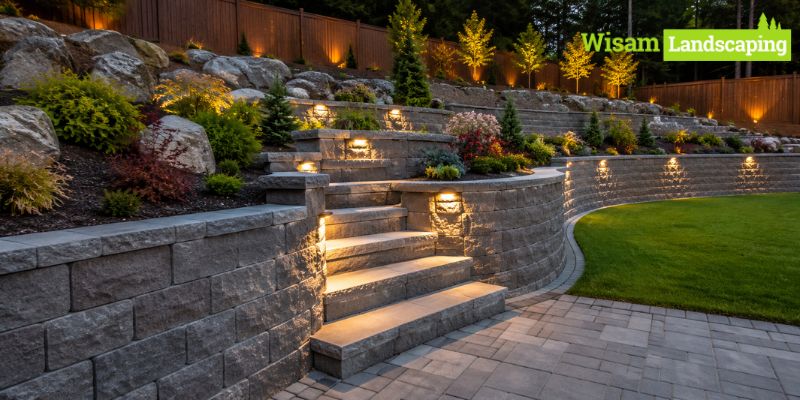
Out there among the trees, charm comes not just from flowers but from what lies beneath. Where land tilts or dips, solid structures hold earth in place instead of letting it slide away during heavy rain. These barriers shape usable spaces – patios, gardens, even paths – by taming awkward angles one block at a time. If you’re considering retaining wall installation services in Vancouver, understanding the purpose and long-term benefits of retaining walls can help you make informed landscaping decisions.
When facing soil loss or uneven ground, retaining walls hold things together – literally and visually. Built right, they guard what you’ve put into your yard by stabilizing areas that might otherwise slip away. Safety improves where slopes exist; upkeep becomes simpler too. These structures shape space without shouting about it, doing heavy lifting quietly across seasons.
At Wisam Landscaping, we’ve worked with homeowners across Vancouver to design retaining walls that combine durability, functionality, and attractive landscaping. This guide explains why retaining walls are an essential part of long-lasting landscape design.
Where terrain shifts in height, retaining walls serve a crucial role by holding soil in place. When slopes lack proper reinforcement, problems like runoff, shifting earth, and gradual breakdown often emerge. This is why many homeowners rely on experienced landscape retaining wall contractors in Vancouver to design solutions that match their property’s unique terrain.
Properly constructed retaining walls help:
These practical benefits make retaining walls one of the most valuable structural additions to many residential landscapes.
Soil tends to creep downward when rain, watering, or gradual compaction takes place. A key role of a retaining wall lies in holding such ground in position. Without support, shifting earth may eventually harm pathways, garden areas, property boundaries, outdoor living spaces, and structural bases alike.
A well-built retaining wall handles uneven ground forces by limiting shifts, keeping outdoor areas steady when seasons shift. In Vancouver, heavy rains during certain times of year increase stress on hillsides – making such structures particularly useful.
A small number of yards truly need a retaining wall, yet certain conditions make it useful more often than not. Some landscapes gain stability when slopes shift over time.
Where the ground slopes sharply, some spots become hard to shape or reach without risk.
Water flow near buildings often slows when retention barriers team up with channels that guide liquid elsewhere. Erosion risks drop as these combined features shift runoff before it pools or digs too deep.
Following intense rain, when soil clearly washes away, it often signals a need for stronger protective measures.
Retaining walls help form flat spaces suitable for patios, gardens, seating areas, and pathways.
Garden beds, trees, and decorative features remain more secure when surrounding soil stays in place.
At Wisam Landscaping, every retaining wall project begins with evaluating both the property’s grading and drainage conditions before recommending the most appropriate solution.
Different properties require different retaining wall systems depending on soil conditions, height requirements, and overall landscape design.
Built from materials like stone or concrete, these structures hold back earth through mass alone. Their stability comes not from anchors but sheer bulk pressing downward.
Popular for residential landscaping, these interlocking systems offer durability with an attractive finished appearance.
Larger projects often require additional structural reinforcement using geogrid materials or engineered systems.
Natural stone offers timeless aesthetics while blending beautifully with surrounding landscapes.
Choosing the right wall depends on engineering requirements as well as your overall landscaping goals.
Many homeowners install backyard retaining walls in Vancouver to maximize outdoor living areas. Instead of allowing steep slopes to limit your yard’s potential, retaining walls can create:
These improvements increase both functionality and property appeal while making everyday outdoor use much more enjoyable.
One of the most valuable functions of erosion control retaining walls is preventing gradual landscape damage. Without proper soil stabilization, erosion may lead to:
Retaining walls provide long-term protection by keeping soil securely in place during heavy rainfall and seasonal weather changes.
Beyond structural support, garden retaining wall installation creates visual interest throughout residential landscapes. Retaining walls can define:
Layered garden terraces often create depth while allowing better plant organization and easier maintenance.
Many homeowners appreciate how retaining walls combine practical engineering with attractive landscape design.
Although retaining walls may appear straightforward, successful construction requires careful planning. Professional installation includes:
Different soil types affect drainage, wall pressure, and structural design.
Proper drainage behind the wall reduces hydrostatic pressure and extends the wall’s lifespan.
Stable base construction helps prevent future shifting or settlement.
Depending on how tall the wall is, what kind of soil exists, how water needs to move away, and personal choices – materials shift accordingly. What works changes when ground type or elevation varies.
From the first sketch, Wisam Landscaping builds each retaining wall to endure – strength woven into form. Durability shapes appearance, not the other way around. Thought guides material choice, placement, load. What stands today must still hold decades from now. Appearance follows function, quietly. These walls do not just divide spaces – they anchor them.
A retaining wall is far more than a decorative feature. It protects sloped land, minimizes erosion, improves drainage, and creates functional outdoor spaces that remain stable year after year. Whether you’re planning a new garden, expanding a backyard, or addressing soil movement, investing in retaining wall installation services in Vancouver is a practical way to protect your property.
Because yards differ in slope, water flow, and earth composition, Wisam Landscaping reviews each site carefully prior to work starting. With those details in mind, the crew constructs barriers that support ground integrity and fit naturally into the surroundings. Whether shaping backyard areas or reshaping broad exterior zones, their structures add strength without disrupting aesthetic harmony. When installed correctly now, such features reduce future maintenance costs, shield planted areas from erosion, and form lasting places for daily use outdoors.
A properly engineered retaining wall can last several decades. Longevity depends on quality materials, proper drainage, soil preparation, and routine maintenance.
Concrete blocks, natural stone, timber, and reinforced concrete are common choices. The right option depends on wall height, soil conditions, budget, and design preferences.
Yes. One of the biggest benefits of erosion control retaining walls is reducing soil movement during heavy rainfall while protecting nearby landscaping and structures.
Absolutely. Backyard retaining walls create level areas for patios, gardens, seating spaces, and walkways that would otherwise be difficult to use.
Professional contractors understand engineering requirements, drainage systems, soil stability, and local building standards, helping ensure the wall remains safe, attractive, and durable for many years.