

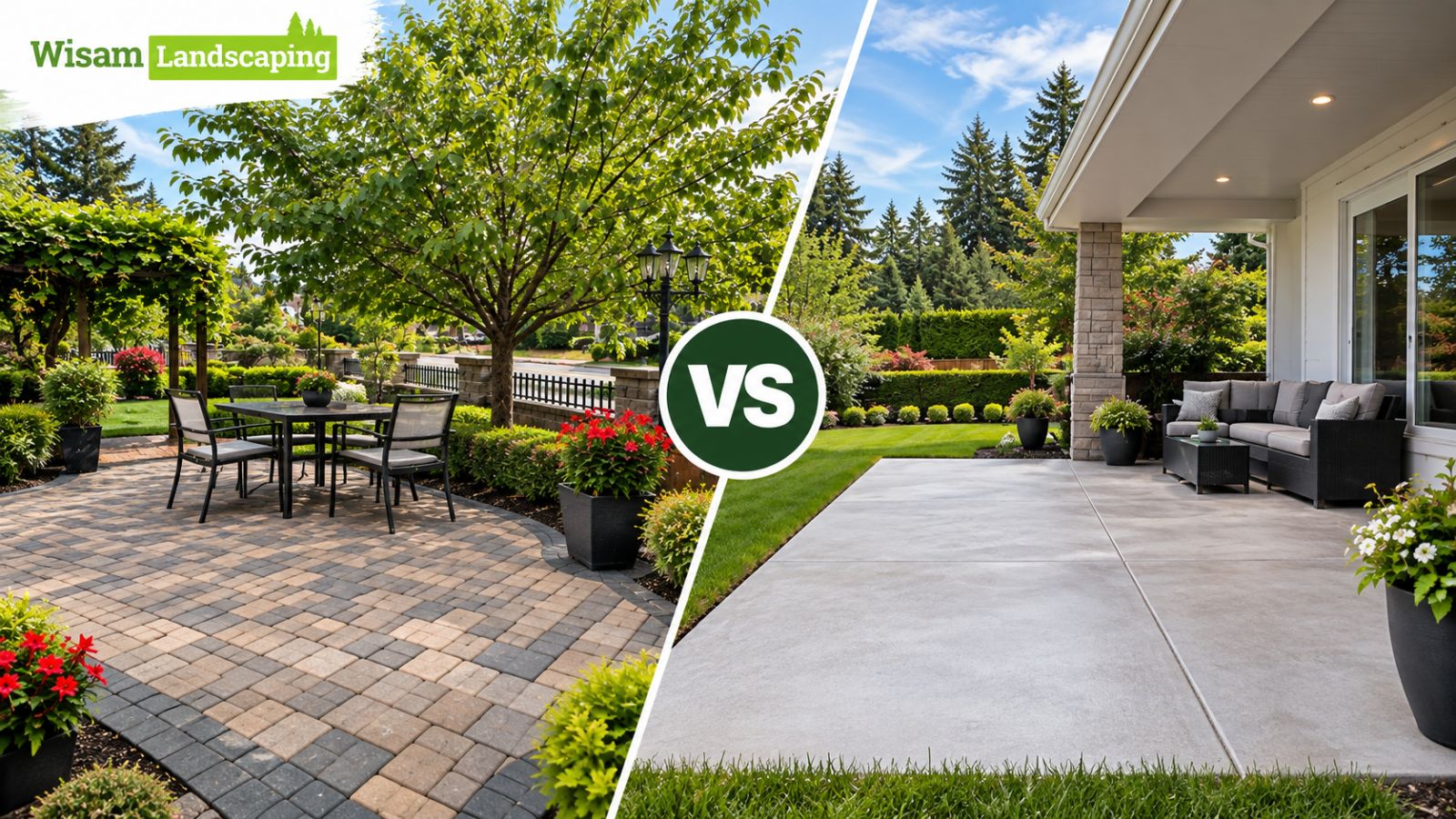
A patio can redefine your outdoor space by serving as a place to eat outside, spend evenings with the family, and add beautiful plant life in the process. Two popular styles that can accomplish this task are interlocking pavers and concrete.
Both options can give your patio a striking appearance, but they can also complement one another when installed correctly. Interlocking pavers in Vancouver create a versatile solution for almost any project, whereas concrete is an appropriate choice for those who want to achieve an ultra-modern look.
The preferred material is highly subjective and depends on a variety of aspects such as costs, design, upkeep, location, and potential future improvements. This guide will discuss the differences between the two materials in greater detail and patio paver installation in Vancouver.
Interlocking pavers are independent pieces of concrete, brick, or stone that are connected together to form a cohesive pattern.
The blocks can be made out of a variety of materials, and they all feature excellent durability. In addition, the pavers can be found in multiple sizes, colours, shapes, and textures so that they complement any home.
The construction process consists of placing several blocks side by side until the entire surface area is covered. Usually, homeowners will need to invest in hundreds of interlocking pavers per square foot when building a patio.
A concrete patio uses a prepared base and a concrete slab. The concrete starts as a wet material. Contractors place it over the prepared area and level the surface. It then needs time to cure.
Concrete may have a plain grey finish. It may also have a decorative finish, texture, pattern, or colour. A concrete patio can give a very modern look. But concrete is not like pavers. A large crack may be quite obvious if it needs repairing.
The biggest difference is how each surface handles movement. Interlocking pavers in Vancouver consist of separate units. They can have some flexibility when the ground moves slightly.
A concrete slab is one connected surface. Movement below the slab can create cracks. Poor base preparation can cause movement, uneven areas, or sinking. Good installation is important with both options.
Proper patio paver installation in Vancouver starts before the first paver goes down. The ground needs preparation. The contractor may remove unsuitable soil and prepare a stable base. The base needs proper compaction. The surface also needs suitable levels and drainage.
A typical paver installation may include several stages:
The exact process can change based on the site. A small patio may need less preparation than a larger patio or a site with poor soil.
Concrete also needs careful preparation. The contractor first prepares the ground. A suitable base may then support the concrete. The concrete gets placed across the prepared area. Workers then level and finish the surface. The concrete needs time to cure before heavy use.
The process can include:
This depends on personal taste.
Pavers can create:
This makes hardscaping more flexible from a design perspective.
Concrete can use:
A concrete patio can create a clean and consistent appearance. The best option depends on the style of your home and garden.
Both materials can provide long-term service when installed correctly. The base matters as much as the surface. A patio that sits on a weak or poorly compacted base may develop problems. Pavers can move slightly over time. Concrete can develop cracks if the ground shifts or other problems occur.
Individual pavers can handle normal outdoor use well when the base and installation are suitable. If one unit becomes damaged, you can normally replace that unit. This can make future repairs easier.
Concrete can also provide a strong patio surface. Proper construction can help reduce these risks.
Weather matters when planning an outdoor patio. Vancouver experiences wet conditions during parts of the year. This makes drainage an important part of patio planning. Water should not remain on the patio for long periods.
Paver systems can allow water to move through joints when the correct materials and installation methods are used. The exact drainage performance depends on the paver system and base.
Concrete is a solid surface. Water needs a suitable slope and drainage paths to move away from the patio. Poor drainage can create standing water. A professional should assess the site before installation.
Both surfaces need basic care. Regular maintenance can help keep a patio looking good.
Paver maintenance may include:
Joint material may need attention over time.
Concrete maintenance may include:
Both can work for outdoor living spaces. Patios can be home to furniture, a dining set, a barbecue, or any other appropriate pieces.
Pavers can be used to create some more detail in the area. Concrete can give you a simple floor surface that can work with contemporary outdoor furniture.
You must think about how you will utilize the area. If you want something very detailed, then pavers can work with other landscaping elements. If you prefer a clean and simple space, concrete may suit the design.
Pavers can work well with wider garden designs. You can use different paver colours to create zones. For example, a patio can have a darker border around a lighter centre.
You can also connect the patio to a garden path. This creates a more connected outdoor space. Pavers can also work with planting areas, retaining walls, steps, and other hardscape design features.
Concrete can also work well in modern gardens. A simple slab can provide a clean background for plants and outdoor furniture. You can add garden beds around the edges.
The cost of patio construction depends on several factors.
These can include:
Do not compare materials based only on the price per square foot. A cheaper surface may still require additional site work.
For instance, a 300-square-foot patio will require different preparation than an equally sized patio. Ground conditions can make a huge difference. Get a detailed quotation from the contractors.

The base is perhaps one of the most critical components of a patio. It may be invisible after installation, yet it serves as the foundation for the surface.
A poor base can cause:
A contractor must evaluate the site prior to the installation of the paving decorative stones.
Pavers can usually be dismantled and reused in many circumstances. For instance, you may desire to redesign part of your garden in the future. Individual pavers can frequently be extracted without damaging them.
Changes can be more difficult with concrete. You cannot simply remove one small section as easily as an individual paver.
If your outdoor plans may change in the future, think about this before installation. The design of the original plan may supplement garden beds, paths, and lighting or drainage zones. The process of proper planning will help avoid changes in the future.
It is hard to give one answer, as the value of a patio depends on many aspects, such as installation, maintenance, quality of materials used, the location itself, and the way you will use it. The use of pavers may provide more options regarding repair and design. Wisam Landscaping offers installations that have long-term value.
Concrete may suit you if you prefer:
| Feature | Interlocking Pavers | Concrete |
| Design options | Many | Many |
| Individual repairs | Easier | More difficult |
| Surface appearance | Patterned and varied | Smooth and consistent |
| Drainage | Depends on system | Needs suitable slope and drainage |
| Maintenance | Regular basic care | Regular basic care |
| Future changes | Individual units can be removed | Changes can be more difficult |
| Installation | Requires careful base preparation | Requires careful base and curing |
| Best for | Flexible and decorative designs | Simple and consistent designs |
Interlocking pavers and concrete patios can both create a strong and useful patio. Interlocking pavers in Vancouver can suit owners who want flexible design options and easier repairs. Pavers also work well with larger hardscaping and landscaping projects. Concrete can suit people who prefer a smooth patio surface. With patio paver installation, proper site preparation is important.
The patio paver installation in Vancouver that was done correctly may become an integral element of your outdoor living space. Spend enough time on planning and discussing details with the contractor before the process starts. Wisam Landscaping is able to offer you the most functional pavers that you can opt for.
Both can work well. Pavers offer flexible designs and easier individual repairs. Concrete offers a smooth and consistent surface. Your site, budget, and design goals should guide the choice.
Yes. Properly installed pavers can provide long-term outdoor use. Good base preparation and drainage are important for durability.
Yes. You can remove individual damaged pavers and replace them. This can make repairs less noticeable than repairs on a concrete slab.
Concrete can develop cracks. Ground movement, moisture, temperature changes, and installation conditions can contribute to cracking. Good preparation can help reduce some risks.
Pavers can work well in outdoor spaces. But the installation must account for local site and drainage conditions. Proper preparation is important in wet climates.