

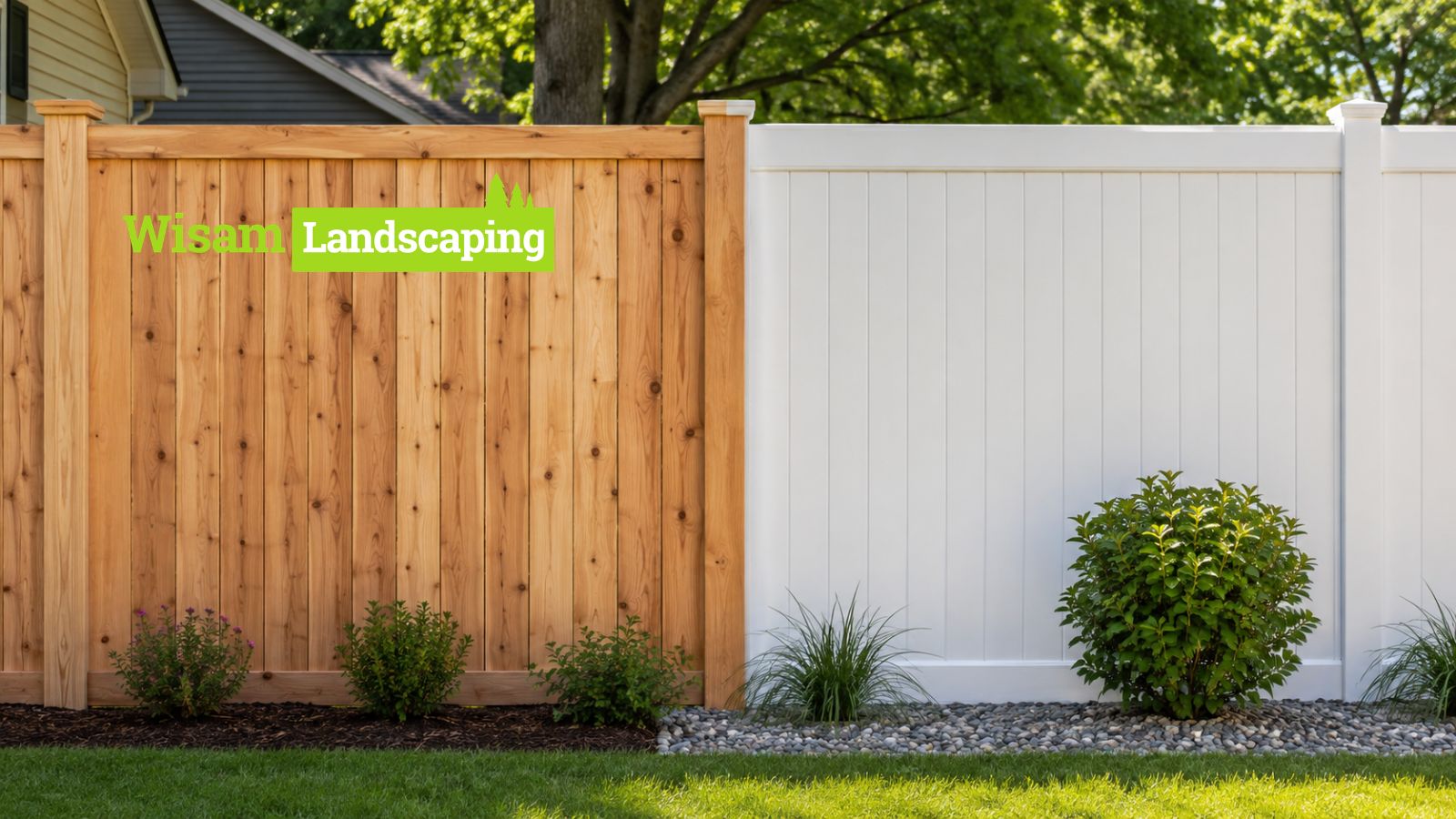
Choosing a new fence is rarely just about marking a property line. For Vancouver homeowners, the right Fence can influence privacy, appearance, maintenance, security, durability and even how a property feels from the street. Two of the most commonly considered options are cedar and vinyl, but they behave very differently over time.
If you are comparing Cedar vs Vinyl Fence options, the best choice depends on how you use your yard, how much maintenance you are willing to perform, your preferred appearance and the conditions around your property. This guide examines the practical differences between cedar and vinyl fencing so you can make a decision based on long-term value rather than upfront price alone.
Cedar and vinyl can both work well for residential fencing, but they deliver value in different ways. Cedar is a natural wood product with a warm appearance, a traditional feel and the ability to be stained or painted. Vinyl is a manufactured fencing material designed to provide consistent appearance with relatively little ongoing maintenance.
For homeowners researching Wood Fence options, cedar is often attractive because every board has natural grain and variation. Vinyl, on the other hand, offers uniformity. Its colour and profile remain consistent across the fence, which can create a clean, contemporary appearance.
The important question is not simply which material is “better.” Instead, consider which material performs better for your particular property, lifestyle and expectations.
Cedar has been used for residential fencing for generations because it combines appearance with useful natural properties. Quality cedar is relatively lightweight, workable and naturally resistant to decay compared with many untreated wood species.
A cedar fence can also be customised. Homeowners can select different board profiles, heights, post designs, stain colours and construction styles. If the fence becomes weathered over time, it can generally be cleaned, repaired, stained or refinished rather than completely replaced.
That flexibility is a significant advantage for homeowners who want their Backyard Fence to complement an existing landscape design.
Vinyl fencing appeals to homeowners who want a low-maintenance alternative to traditional wood. It does not require routine staining or painting, and its smooth surface is relatively easy to clean.
Vinyl is also manufactured in consistent profiles and colours, making it useful for homeowners who prefer a neat, uniform appearance. Privacy-style vinyl panels can provide substantial visual screening, which makes them particularly relevant when Property Privacy is a priority.
However, low maintenance does not mean maintenance-free. Vinyl can still collect dirt, algae and other surface contaminants, particularly in damp or shaded areas. It may also behave differently from wood when exposed to significant temperature changes or impact.
When comparing Fence Durability, it is important to distinguish between material durability and the durability of the entire fencing system.
A fence is not simply a row of boards or panels. Its posts, fasteners, foundations, rails, gates and installation all influence how long it remains functional. Even an expensive material can perform poorly if posts are improperly installed or drainage around the fence is inadequate.
Cedar can last for many years when properly selected, installed and maintained. However, it is an organic material, so exposure to moisture, sunlight and temperature changes will gradually alter its appearance and condition.
Vinyl does not rot or rust in the same way that untreated wood components can. That makes it attractive for homeowners who want to minimise routine maintenance. Nevertheless, vinyl can become brittle under certain conditions and can be damaged by strong impacts.
For cedar, prolonged moisture exposure can accelerate deterioration if the wood is not appropriately protected and maintained. Proper post installation, ground clearance where appropriate and drainage can make a meaningful difference.
Vancouver’s wet climate makes moisture management particularly important when planning residential fencing. Water can remain around fence posts and low sections of a property, especially where drainage is poor.
Vinyl is naturally resistant to moisture, but the supporting structure still matters. Poor installation can cause movement, leaning or gate problems regardless of the panel material.
This is why experienced Fencing contractors assess the property rather than simply recommending a material based on a catalogue photograph.
A major advantage of a cedar Wood Fence is its visual character. Natural wood can soften the appearance of a modern home, complement a garden and integrate naturally with trees, shrubs and other landscaping.
Cedar also develops a different appearance as it ages. Some homeowners appreciate the silvery-grey weathered look, while others prefer to preserve warmer cedar tones with a suitable finish.
This gives homeowners more control over the appearance throughout the life of the fence.
The main trade-off is maintenance. Cedar fencing generally requires more attention than vinyl if the homeowner wants to preserve its original appearance and maximise its service life.
Depending on exposure and the finish used, maintenance may include:
This does not necessarily make cedar a poor investment. In fact, many homeowners prefer a material that can be repaired and refinished rather than replaced as soon as its appearance changes.
A Vinyl Fence can be a practical choice for homeowners who prioritise convenience. Unlike painted or stained wood, vinyl does not need periodic refinishing simply to maintain its surface colour.
For busy households, this can have real value. A homeowner may prefer spending weekends maintaining a garden rather than cleaning, staining and repairing a fence.
Vinyl is also particularly useful where a consistent privacy screen is desired. Full-height panels can reduce visibility between neighbouring properties and create a more enclosed outdoor environment.
Vinyl’s uniformity is both an advantage and a consideration. Some homeowners like the clean appearance, while others find natural cedar more visually appealing.
The decision therefore depends partly on architectural style. A traditional home with established landscaping may look particularly natural with cedar, while a contemporary property may pair well with clean-lined vinyl fencing.
The goal should be visual compatibility rather than choosing a material simply because it is currently popular.
A Privacy Fence serves a different purpose from a decorative boundary fence. If your main concern is seeing into the neighbour’s yard—or preventing neighbours from looking into yours—height, board spacing and fence orientation matter as much as material.
For Backyard Security, a solid fence can create a clearer physical boundary and make casual access more difficult. However, a fence should not be treated as a complete security system. Gates, locks, lighting, landscaping and sightlines all influence security.
Cedar and vinyl can both be used for privacy fencing. The better choice depends on the desired appearance, maintenance expectations, budget and structural requirements.
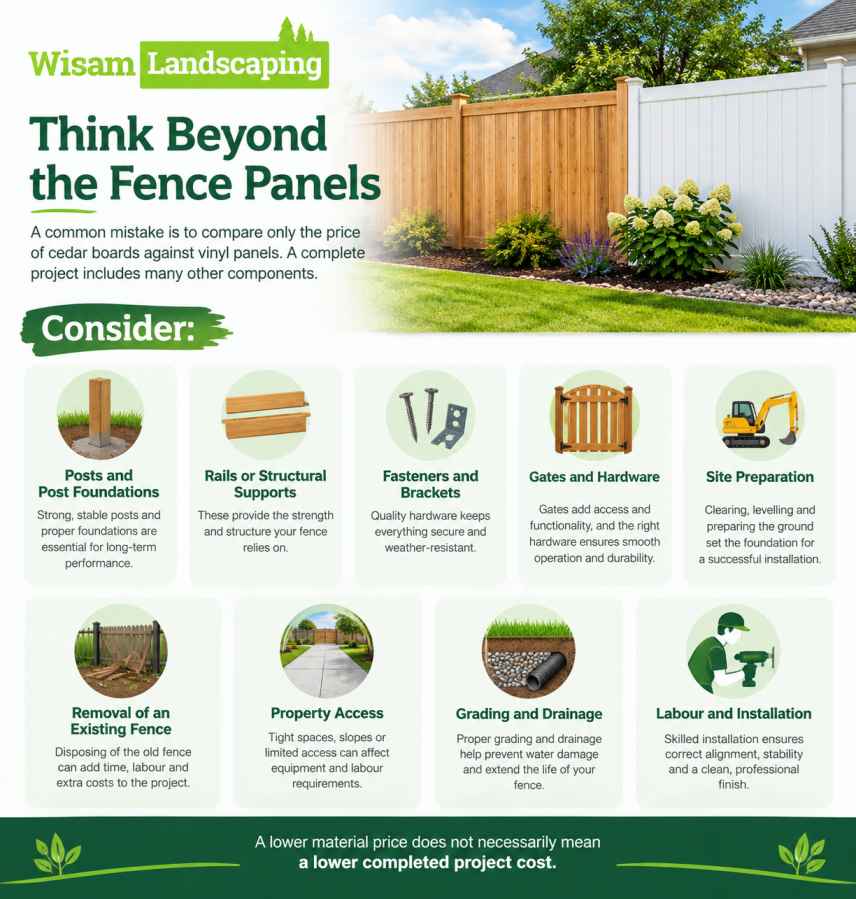
A common mistake is to compare only the price of cedar boards against vinyl panels. A complete project includes many other components.
Consider:
A lower material price does not necessarily mean a lower completed project cost.
Does a cedar or vinyl fence actually increase property value?
There is no universal answer. Fencing can contribute to perceived value by improving privacy, defining outdoor areas, enhancing curb appeal and making a yard more functional. However, homeowners should be cautious about assuming that every dollar spent on a premium fence will return an equivalent amount when the property is sold.
The strongest value usually comes from a fence that looks appropriate for the property, performs reliably and solves a genuine need.
For example, a well-designed privacy fence may be particularly useful for a backyard that directly faces a neighbouring property. In that situation, the practical benefit can be more important than whether the fence is made from cedar or vinyl.
Cedar can make more sense when natural aesthetics, customisation and repairability are important priorities.
Consider cedar if you:
A homeowner with a landscaped garden, mature trees and a character-style property may find that cedar creates a more cohesive outdoor environment.
For someone planning Wood Fence Installation in Vancouver, it is also worth discussing the grade and treatment of the timber, post construction, drainage and expected maintenance before choosing a specific product.
Vinyl can be the stronger option when low maintenance and consistent appearance are the primary priorities.
It may suit homeowners who:
For example, consider a homeowner who travels frequently and wants a privacy fence around a small backyard. Vinyl could provide the desired screening without requiring regular refinishing.
For homeowners comparing Vinyl Fence Installation in Vancouver, it is important to evaluate panel quality, structural components, installation methods and warranty terms rather than treating all vinyl fencing as equivalent.
The cheapest quote does not automatically represent the best value. A proper comparison should consider installation, maintenance, repairs and expected lifespan.
A cedar fence that requires periodic refinishing may have higher maintenance costs, while a vinyl fence may have a higher initial material cost. Looking only at the first invoice can therefore produce a misleading comparison.
Even premium materials cannot compensate for poor installation. Posts that are not properly positioned or secured can lead to leaning, movement and gate alignment problems.
Experienced installers also account for slopes, property boundaries, drainage and existing landscaping. These practical details are often more important to long-term performance than small differences between material brands.
A flat, sunny yard and a shaded, moisture-prone yard have different fencing requirements. Likewise, a property with young children, pets or frequent outdoor entertaining may have different priorities from a low-use backyard.
The right Fence should respond to the property’s actual conditions rather than follow a one-size-fits-all recommendation.
Before committing to cedar or vinyl, walk around the property and identify the actual problem the fence needs to solve.
Ask yourself:
It is also worth requesting a detailed scope of work rather than comparing only headline prices. The quote should make it reasonably clear what materials, posts, gates, removal, preparation and installation are included.
There is no universal winner in the Cedar vs Vinyl Fence debate. Cedar can deliver natural beauty, customisation and repairability, while vinyl offers low maintenance, moisture resistance and consistent appearance.
The better investment is the material that meets your property’s requirements without creating unnecessary expense. If natural character and custom design are priorities, cedar may provide stronger personal value. If convenience and minimal maintenance matter most, vinyl may be the more practical choice.
Most importantly, focus on the complete fencing system rather than the material alone. Good planning, appropriate materials, quality installation and sensible maintenance will have a greater effect on long-term satisfaction than simply choosing the most expensive option.
Choosing between cedar and vinyl is ultimately a decision about value, lifestyle and long-term performance. Cedar offers natural character and design flexibility, while vinyl can reduce maintenance and provide consistent privacy. Neither material is automatically the best choice for every property.
If you are considering Wood Fence Installation in Vancouver, take time to assess your property’s exposure, privacy requirements, landscape design, maintenance expectations and long-term plans. A well-planned fence should complement the home, withstand local conditions and provide a practical benefit for years to come.
For homeowners who want to explore their options with a local landscaping perspective, Wisam Landscaping can be considered as one source of guidance when assessing fencing materials and outdoor design requirements. The focus should remain on selecting a suitable solution for the property rather than choosing a material simply because it is marketed as premium.
Both materials can work well when correctly specified and installed, but they respond to moisture differently. Vinyl is naturally resistant to moisture and does not rot like wood. Cedar can also perform well, but it requires appropriate construction and maintenance to manage prolonged exposure to rain and damp conditions. Post installation and drainage are particularly important because moisture-related problems often begin below or around the fence rather than in the visible panels.
Generally, yes. Cedar can require cleaning, staining, sealing and occasional board replacement depending on exposure and the appearance the homeowner wants to maintain. Vinyl typically needs less routine care and can often be cleaned with appropriate water and cleaning methods. However, “low maintenance” does not mean “no maintenance.” Both materials should be inspected periodically for damage, loose components, gate problems and other issues that can affect performance.
Both cedar and vinyl can be designed as privacy fencing. The level of privacy depends on fence height, board or panel configuration and spacing rather than material alone. Solid vinyl panels can provide highly consistent screening, while cedar can be constructed with overlapping or tightly spaced boards. Local requirements, property layout and neighbouring sightlines should also be considered before selecting the final design.
It depends on what type of durability you are measuring. Vinyl is highly resistant to moisture and does not decay like wood, which can make it attractive for low-maintenance applications. Cedar can be repaired, refinished and have individual boards replaced, giving it a different type of long-term flexibility. Installation quality, exposure, impact, maintenance and structural design all affect actual fence performance, so material alone should not determine the decision.
Start by comparing the complete scope rather than the material price. Check whether each quote includes removal, disposal, posts, concrete or other foundations, panels or boards, gates, hardware, site preparation and installation. Ask what grade or specification of material will be used and how the contractor plans to handle slopes, drainage and property boundaries. A detailed quote makes it much easier to compare genuine value rather than simply choosing the lowest number.