

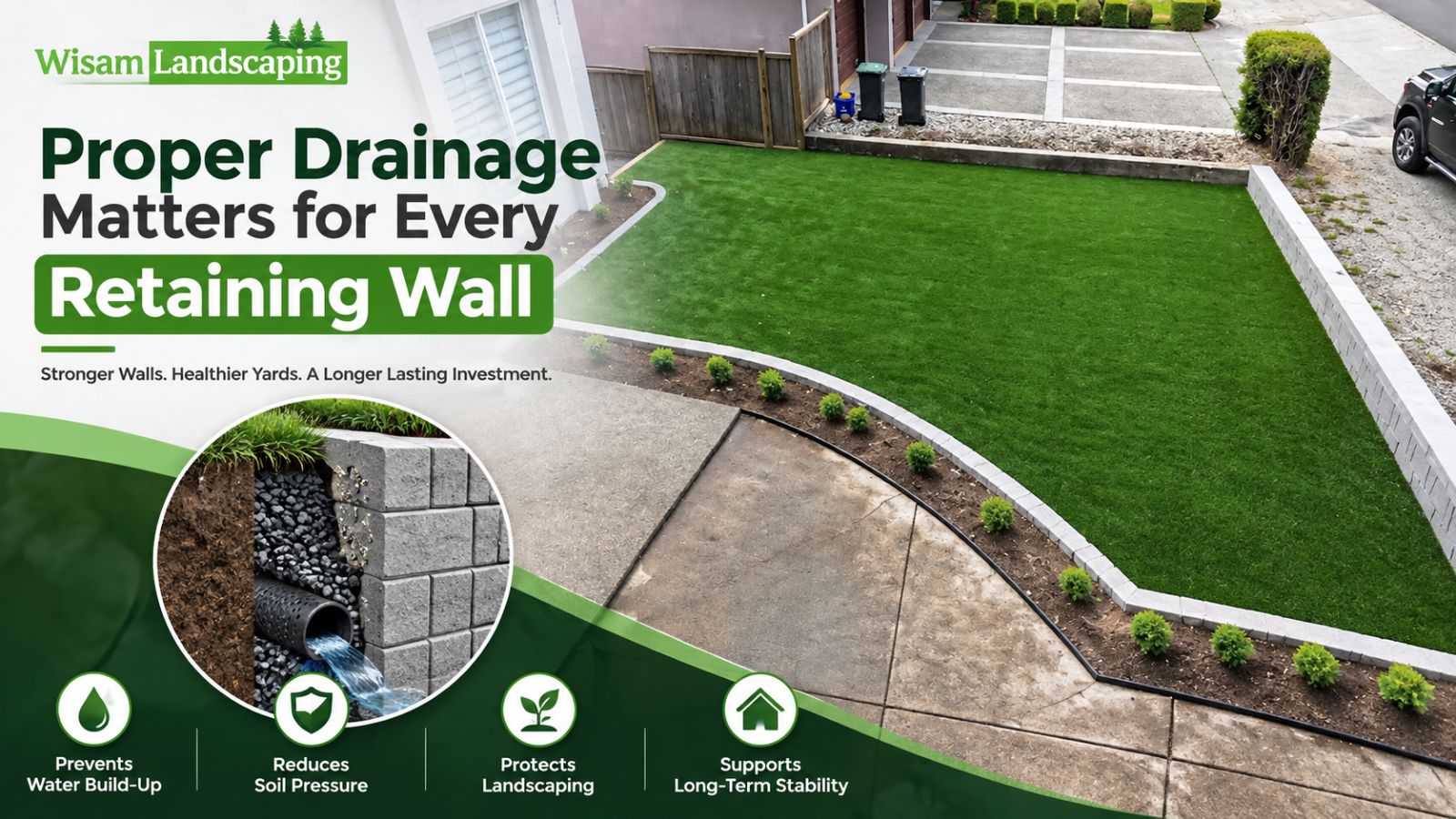
A retaining wall can look tough from the street. But how well it lasts often comes down to what is going on behind it. Retaining wall drainage is a key part of any solid plan. If water gets stuck, it can build up force on the wall, loosen the soil around it, and lead to shifting or worse. This point hits harder in places like Vancouver. Rain there can be heavy, and the ground can turn wet fast. A wall may seem fine right after it is built. Later, cracks or bulges can show up if no clear plan was put in place for water. This guide has one goal. It will cover where the water goes, why drainage matters, and what a homeowner can look for before they build or fix a retaining wall.
A good Retaining Wall Drainage Guide starts with one basic principle: water needs a controlled path out of the soil. Water needs a steady way to leave the soil. When rain soaks into the ground behind a wall, some of it passes through the soil. If there is no working drainage setup, that water can stay in place. When the soil turns fully wet, it can put more load and pressure on the wall.
Picture a yard slope after many days of rain. The ground gets heavier and less firm. It also becomes harder to hold in position. A retaining wall has to manage these changes and still keep the soil from moving.
A properly planned drainage arrangement can help:
The important point is that drainage should not be treated as an optional finishing detail. It needs to be considered during planning and construction.
Homeowners often judge a wall by its visible surface. They look at the stone, concrete blocks, timber, colour, and overall finish. Those details matter, but the hidden construction is just as important.
A retaining wall has to resist the sideways force created by soil. Water can make that situation more difficult.
For example, imagine a small wall holding back a garden bed. During dry weather, the wall may show no obvious problems. After prolonged rain, however, the soil behind it becomes saturated. If water cannot escape efficiently, pressure can build against the wall.
This is also where experienced Retaining Wall Contractors Vancouver can provide useful site-specific advice. A practical assessment is more valuable than choosing a drainage method simply because it worked on another property.
No single drainage layout works the same way on every lot.
Soils act differently in storms. Clay can hold water longer than sand. Loose fill can shift and settle. Compacted ground can change how water soaks in. Even a yard with a steep grade will move runoff in a different way than a mostly flat area.
Before you build, check the property for water problems that are already there. Find the paths rain follows now. Note where water tends to sit. Watch the slope to see if it pushes runoff toward the planned wall.
A basic site check usually covers these points:
This groundwork can prevent a common mistake: building the wall first and trying to solve the water problem afterwards.
One of the familiar components behind many retaining wall systems is Gravel Backfill. Its role is not simply to fill empty space.
A suitable drainage layer can provide a more permeable zone behind the wall, helping water move toward the intended drainage outlet rather than remaining trapped directly against the wall.
However, simply placing gravel behind a wall does not automatically create a complete drainage system. The material, depth, placement, separation from surrounding soil, and outlet all need to work together.
In practical landscaping work, details such as these are easy to overlook because they disappear once the project is completed. That is exactly why they deserve attention during installation.
The goal is controlled Water Management, not merely adding a pile of gravel behind the wall.
Many retaining wall problems have visible warning signs. The key is noticing them before a minor issue becomes a major repair.
Leaning or Bulging
A wall that starts moving outward may be experiencing excessive pressure. Water trapped behind the wall can be one contributing factor.
Cracks
Cracks do not always mean a wall is about to fail. Their size, location, pattern, and progression matter. New or expanding cracks deserve professional assessment.
Standing Water
Persistent water collecting behind or near a wall suggests that the existing drainage arrangement may not be working as intended.
Soil Erosion
If soil is washing away around the wall, paths, or garden beds, the problem may involve surface runoff as well as subsurface drainage.
Damp or Saturated Ground
Ground that stays unusually wet after rainfall can indicate poor water movement. This can affect both the soil and surrounding Landscaping.
The earlier these signs are investigated, the more options a property owner may have.
A Stone Wall can add character to a garden while providing useful support on a sloped site. Natural stone, concrete blocks, and timber all have different characteristics, but none should be considered separately from drainage.
A visually attractive wall still needs suitable foundations, stable soil conditions, appropriate backfill, and a way for water to leave the structure.
This is especially important when a wall forms part of an outdoor living area. A drainage problem can affect more than the wall itself. It may lead to muddy paths, damaged planting areas, or water moving toward places where it is unwanted.
The best-looking wall is not necessarily the best-performing wall. The stronger approach is to balance appearance, structural requirements, site conditions, and long-term maintenance.
Drainage and Erosion Control are closely connected.
When rain runs fast downhill, it can pick up small soil bits. With time, those losses can expose roots. They can also weaken garden edges and gradually alter the land’s shape.
A retaining wall can help stabilize a slope, but it should be part of a broader solution when runoff is significant.
A small decorative garden wall and a tall wall supporting a steep slope are very different projects.
Professional advice becomes particularly important when:
Wisam Landscaping approaches retaining wall projects by considering the slope, drainage requirements, soil conditions, and intended use of the outdoor space rather than treating the wall as an isolated feature.
A retaining wall does much more than hold soil in place. Long-term results depend on how the full setup handles rain, runoff, soil shifting, and ground changes over time. Good retaining wall drainage helps keep water from getting trapped behind the wall. It also supports steadier performance as conditions change.
Wisam Landscaping knows drainage, erosion control, site factors, and wall build details must fit together. If you plan a retaining wall or you are seeing drainage trouble near an older one, a site review can guide you toward a workable fix. That can help stop a small problem from turning into an expensive repair. Visit now!
Drainage helps prevent water from becoming trapped behind the wall. Saturated soil can create additional pressure and may contribute to movement, cracking, or other structural problems. A properly planned drainage system gives water a controlled route away from the wall.
A drainage system may include permeable backfill such as suitable gravel, drainage pipe, filter fabric, and an appropriate outlet. The exact arrangement depends on wall design, soil conditions, site slope, and local requirements.
It can contribute to leaning. Water trapped behind a wall can increase pressure on the structure, particularly when the surrounding soil becomes saturated. However, leaning can have several causes, so an existing wall should be assessed rather than assuming drainage is the only problem.
No. Drainage requirements vary according to wall height, soil, slope, rainfall, groundwater conditions, construction method, and nearby loads. A system suitable for a small garden wall may not be appropriate for a larger structural wall.
Homeowners should visually inspect the wall and drainage outlets periodically, especially after periods of heavy rain. Look for standing water, blocked outlets, erosion, new cracks, soil movement, or changes in the wall’s position. Early inspection can make maintenance much easier.