

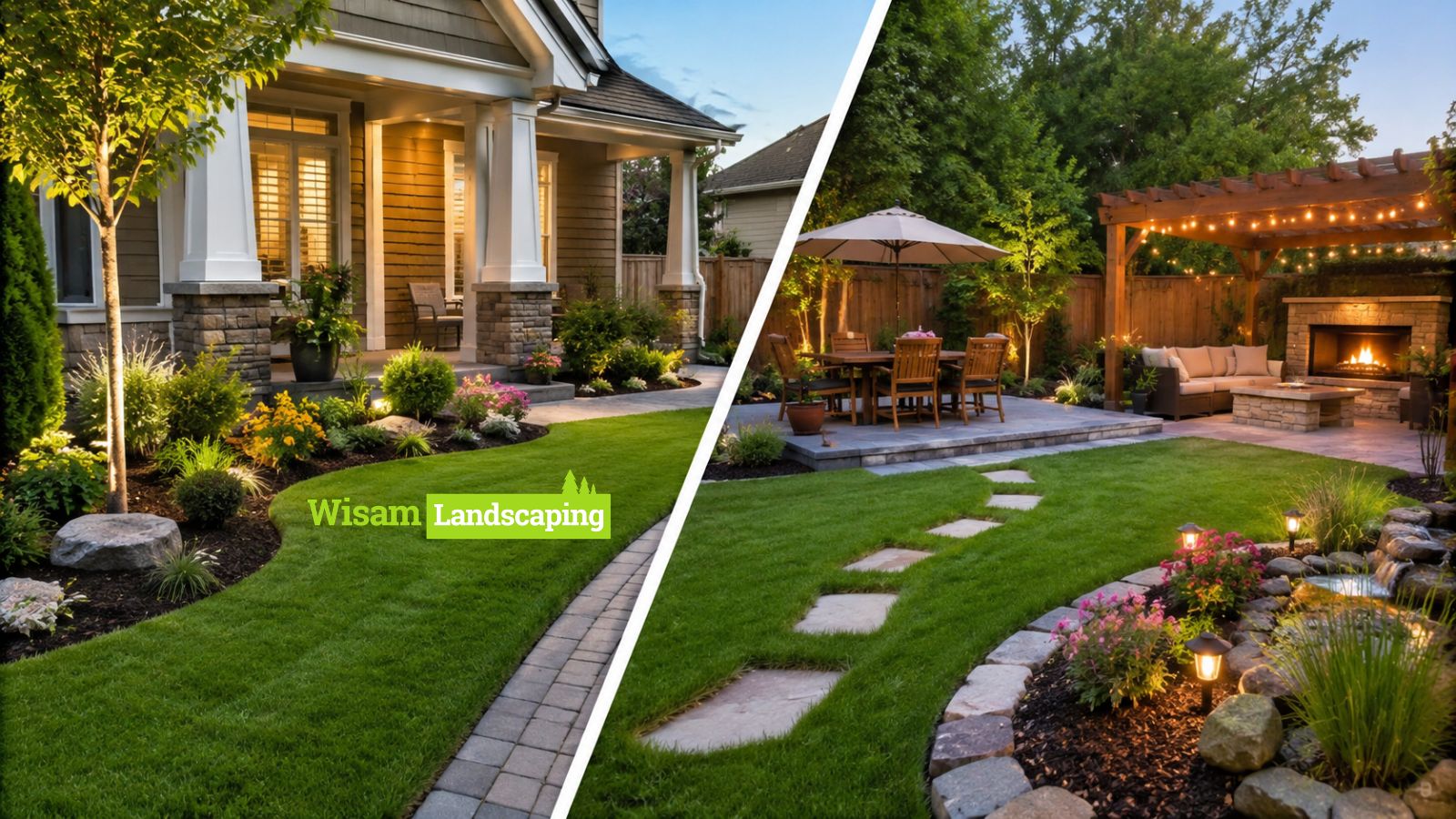
When homeowners decide to improve their outdoor space, one question often comes first: Should I invest in the front yard or the backyard?
The answer depends on how you use your property, what problems need fixing, your budget, and what you want the landscape to achieve. A front yard may provide the biggest improvement to curb appeal, while a backyard can transform the way your family spends time at home.
Understanding Front Yard vs Backyard Landscaping is therefore less about choosing one side and more about identifying which area will deliver the greatest practical benefit for your property.
For homeowners considering Front Yard Landscaping, the front of the property can create a strong first impression while improving everyday access and appearance. Meanwhile, a well-planned backyard can support entertaining, relaxation, children’s activities, gardening, and outdoor living.
The smartest approach is to evaluate both spaces before deciding where your money should go.
Your front yard is one of the first things people notice when they approach your property.
It frames the house, connects the driveway and entrance, and contributes significantly to the overall appearance of the property. Even relatively simple improvements can make a home look more cared for and welcoming.
Curb appeal is often associated with flowers, shrubs, and a neat lawn, but effective front-yard design involves much more.
Consider how these elements work together:
The goal is not to fill every available space with plants. Good residential landscape design creates visual balance while keeping the property practical to maintain.
For example, a narrow front yard may benefit from layered planting rather than large garden beds that reduce usable space. A sloping property may need careful grading, retaining solutions, or erosion control before decorative landscaping is considered.
Investing in the front yard first can make sense when:
In these situations, front-yard improvements can create a noticeable change without requiring a complete property renovation.
The backyard usually has a different purpose.
While the front yard is primarily about arrival, appearance, access, and curb appeal, the backyard is often where homeowners spend their leisure time.
Depending on the property, the backyard may need to accommodate:
This means backyard landscaping often requires more detailed planning than simply choosing plants.
If you want to spend more time outside, the landscape needs to support that lifestyle.
For example, a homeowner who regularly hosts family gatherings may benefit more from a properly designed patio, comfortable seating area, lighting, and circulation paths than from simply adding additional garden beds.
Similarly, a family with young children may prioritize open lawn space and durable surfaces over delicate ornamental landscaping.
The important question is:
What do you want to do in your backyard?
Once that is clear, the design can be built around those activities.
There is no universal answer because every property has different needs.
Instead, evaluate the two spaces according to five factors: function, appearance, condition, lifestyle, and return on investment.
Start with what is currently causing the biggest problem.
If the front walkway is unsafe, drainage is damaging the lawn, or overgrown vegetation is affecting access, the front yard may deserve priority.
If the backyard is unusable because of poor drainage, lack of shade, or an awkward layout, the backyard may be the better investment.
Do not let aesthetics distract you from infrastructure problems.
A beautiful landscape will not perform well if water constantly collects in the wrong location.
Your lifestyle should strongly influence the decision.
Ask yourself:
A retired couple may have very different priorities from a young family with children and pets.
Good landscape design responds to the people living in the house rather than following a generic template.
One of the biggest mistakes homeowners make is designing a landscape based only on how it looks when newly installed.
A garden that requires constant pruning, watering, fertilizing, and cleaning may become frustrating over time.
Before choosing plants or features, consider:
A plant may look small and manageable when purchased but become much larger after several years.
Experienced landscape planning accounts for mature plant size rather than designing only for the first season.
Every landscape requires some care.
However, thoughtful plant selection and proper placement can reduce unnecessary work.
Grouping plants with similar water requirements, using appropriate groundcovers, installing efficient irrigation, and choosing suitable native or climate-adapted plants can make ongoing maintenance more manageable.
Even if you can only afford to renovate one area today, it is worth thinking about the entire property.
Why?
Because front and backyard improvements can affect one another.
For example, drainage from the front yard may influence water movement toward the backyard. A new fence may affect access for future landscaping work. Trees planted near property boundaries may eventually affect patios, structures, or neighboring properties.
Creating a basic long-term landscape plan can help prevent expensive changes later.
You do not have to complete everything at once.
Instead, divide the property into stages.
Phase 1: Fix infrastructure
Address drainage, grading, irrigation problems, retaining issues, unsafe paths, and other foundational concerns.
Phase 2: Establish the main layout
Define lawn areas, garden beds, pathways, patios, privacy zones, and major planting areas.
Phase 3: Add functional features
Install seating areas, lighting, fencing, outdoor cooking spaces, or other lifestyle features.
Phase 4: Refine the landscape
Add decorative planting, seasonal color, containers, edging, and smaller design details.
This approach allows homeowners to improve their property over time without making every decision at once.
If your main goal is to create usable outdoor living space, the backyard will often deserve greater attention.
Consider how people move through the space.
A good outdoor living area should not feel like furniture randomly placed on a lawn.
There should be a natural relationship between the house, patio, seating, cooking area, garden, and pathways.
For example, if the kitchen opens directly onto the backyard, placing an outdoor dining area nearby can make entertaining easier.
If afternoon sun makes the patio uncomfortable, shade should be considered during the planning stage.
If privacy is limited, layered planting, fencing, or screening can make the area feel more comfortable.
These details determine whether a backyard is actually used or simply looks good from inside the house.
Some backyards need a broader Backyard Renovation rather than simple planting.
This may happen when the existing space has:
In such cases, planting new shrubs will not solve the underlying problem.
The renovation should begin with the physical structure of the space.
For example, fixing drainage before installing a new patio can prevent water-related problems later. Similarly, correcting an unstable retaining wall before adding landscaping is more sensible than decorating around a structural issue.
Landscaping can contribute to the overall presentation and usability of a property, but it is difficult to assign a guaranteed dollar value to any single landscape improvement.
The impact depends on the property’s location, condition, buyer expectations, quality of the work, and the surrounding neighborhood.
Front-yard improvements can create an immediate visual impression, which may be particularly important when selling.
Backyard improvements can increase the property’s functional appeal by creating additional outdoor living opportunities.
The best investment is usually not the one chosen solely because someone promises a specific return.
Instead, focus on improvements that provide genuine value to your household while also making the property attractive and functional for future owners.
Plants should support the overall design rather than determine it.
Start with circulation, drainage, structures, activity zones, and maintenance requirements.
Water problems can damage lawns, plants, structures, and hardscaping.
Always understand how water moves through the property before installing major landscape features.
More plants and decorations do not automatically create a better landscape.
A strong design uses open space intentionally and creates visual hierarchy.
Small nursery plants can become large trees or shrubs.
Always consider their mature height and width before planting.
Completing one project without considering future work can make later improvements more difficult or expensive.
Even phased landscaping should follow a basic overall plan.
A landscape should work for the people who live there.
A fashionable outdoor feature is not useful if your family will rarely use it.
If your budget is limited, prioritize improvements that solve multiple problems at once.
For example, a well-designed pathway can improve appearance, accessibility, and drainage. Strategic trees can provide shade, privacy, and visual structure. A properly designed patio can support dining, entertaining, and everyday relaxation.
Here are several practical strategies:
Drainage, grading, soil preparation, irrigation, and structural work are difficult to correct later.
Get these elements right before focusing heavily on decorative features.
Instead of buying large quantities of plants, identify where greenery will have the greatest visual and functional impact.
Outdoor lighting is easier to integrate when pathways, seating areas, trees, and garden beds have already been planned.
Do not overcrowd garden beds simply because they look empty immediately after installation.
Plants need room to mature.
A landscape should not look attractive for only a few weeks of the year.
Combine plants and features that provide interest across different seasons.
Professional guidance can be especially useful when a property has complicated grading, drainage, retaining walls, large trees, significant elevation changes, or multiple outdoor living areas.
A knowledgeable landscaping professional can look at the property as a connected system rather than treating each garden bed or patio as an isolated project.
For homeowners working with Front Yard Landscaping, this can mean identifying opportunities to improve curb appeal without creating unnecessary maintenance.
For larger backyard projects, professional planning can help coordinate hardscaping, planting, drainage, lighting, privacy, and outdoor living features.
The value is not simply in having someone choose plants for you. It is in having the overall design considered before construction begins.
Every property has different characteristics, which is why a practical landscape plan should begin with the site itself.
Wisam Landscaping can help homeowners consider the relationship between the home’s architecture, existing landscape, outdoor activities, maintenance expectations, and long-term goals.
Rather than treating the front yard and backyard as completely separate projects, the two areas can be considered as parts of one broader residential landscape design.
This can make phased improvements easier to manage and help ensure that today’s investment does not create problems for tomorrow’s project.
The question of Front Yard vs Backyard Landscaping does not have a one-size-fits-all answer.
If your property’s entrance needs attention, the front yard may provide the most immediate improvement through better curb appeal, access, planting, and presentation.
If your family spends most of its free time outdoors, the backyard may provide greater value through improved outdoor living, privacy, entertainment space, and functionality.
In many cases, the smartest strategy is to improve both areas over time rather than trying to complete everything in one project.
Start with the problems that affect safety, drainage, access, and everyday use. Then build the landscape around your lifestyle and long-term goals.
Whether you begin with Front Yard Landscaping or a larger Backyard Renovation, thoughtful planning will help you spend your budget where it provides meaningful results.
A successful landscape is not simply one that looks attractive immediately after installation. It is one that continues to function, mature, and provide enjoyment for years.
Start with the area that has the biggest functional or visual problems. Front yards are often best for improving curb appeal, while backyards are ideal for outdoor living.
Good landscaping can improve a property’s appearance and buyer appeal. However, the actual impact on property value depends on the property, neighborhood, and quality of the work.
Consider drainage, patios, seating, privacy, pathways, planting, lighting, and outdoor living features. Start with practical needs before decorative elements.
Choose plants suited to the site, allow enough room for mature growth, group plants with similar water needs, and use efficient irrigation where appropriate.
Yes. A phased approach can work very well. Address drainage and structural needs first, then add planting, hardscaping, lighting, and outdoor living features as your budget allows.