

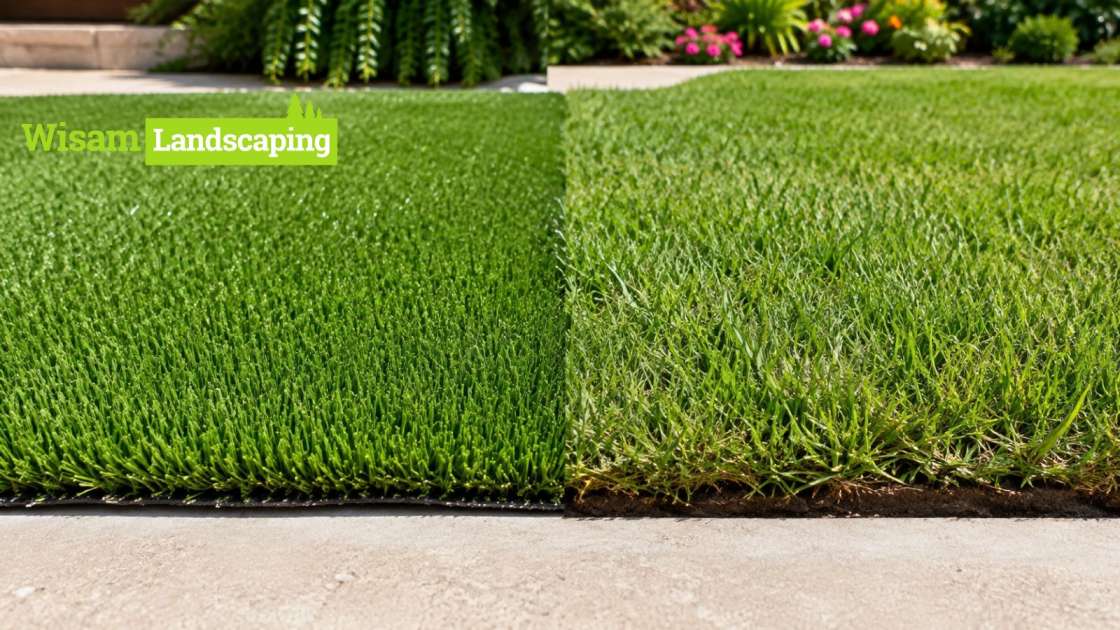
A beautiful lawn should be a source of pleasure and not a constant maintenance activity. Mowing, watering, feeding, and fixing all the bare spots require time and money. If you wish to have a green lawn in every season, the best solution would be artificial turf. Artificial grass has been developing rapidly recently. Contemporary turf has a perfect resemblance to natural grass in terms of color and texture. Nevertheless, such an effect can be achieved only through proper installation. Artificial grass installation will allow you to have not only a beautiful but also a functional lawn in any season.
Natural sod gives you a lawn made up of real grass and soil. Synthetic turf gives you a constantly green lawn that doesn’t require mowing and watering. You can choose
artificial grass installation in Vancouver. This means your lawn will not only look natural but also perform well in every season.
As we all know, the two most common lawn options are artificial grass and natural sod. Both can create an attractive outdoor space. But they work in very different ways. In this guide, we compare artificial grass vs Sod to help Vancouver homeowners make a practical choice.
Artificial grass is an artificial lawn covering that aims to resemble natural grass. The artificial grass is made up of synthetic fibers and put on a suitable surface.
The modern artificial turf provides the user with a neat and green cover for the whole year without having to worry about cutting the grass, fertilization, or regular watering like a natural grass lawn.
This is why many people are attracted to the idea of getting artificial grass because of easy lawn maintenance. However, artificial grass installation is more than just putting in artificial turf.
Sod is natural grass that is grown by a turf supplier and then cut into rolls or sections. These sections contain established grass and a layer of soil and roots.
Sod is a piece of real grass that is supplied by the turf supplier and cut into sections. The sod consists of the grass and a layer of soil and roots.
Once installed, fresh turf becomes a natural part of the garden and establishes its roots in the ground. The sod gives the appearance, texture, and feel of real grass.
It can even heal itself naturally from some kinds of minor damage if maintained.
When comparing artificial grass vs. sod, it helps to look beyond appearance.
Neither option is right for every property. Your yard, soil, drainage, use, and maintenance preferences should all be considered.
Before choosing between artificial grass vs. sod, measure the area carefully.
For example:
Knowing the exact area helps you compare material quantities, installation costs, and future maintenance requirements.
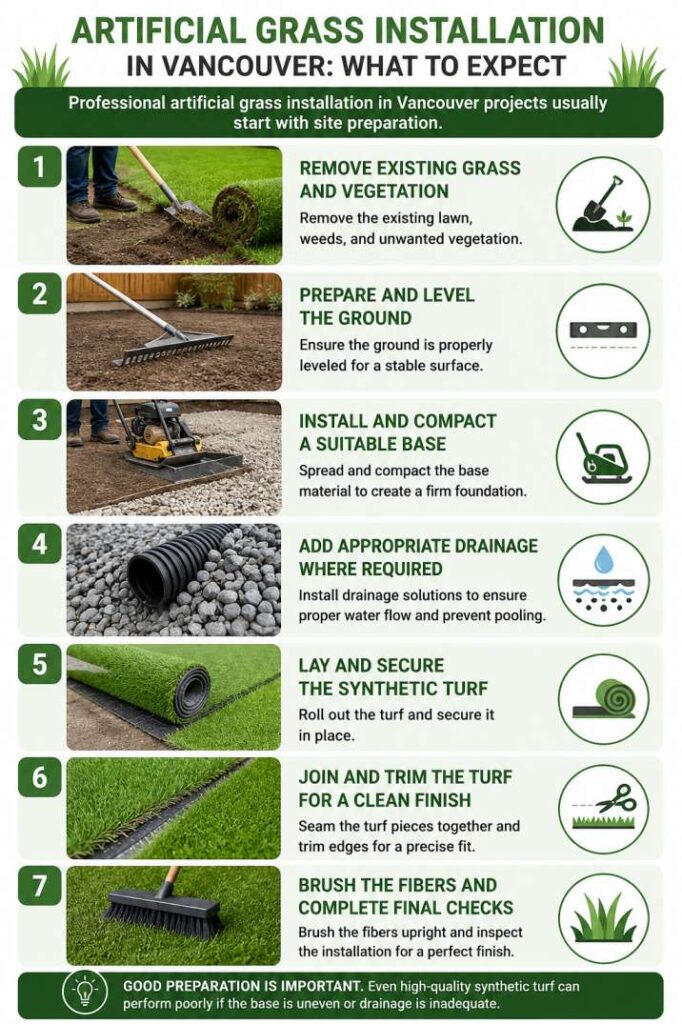
Professional artificial grass installation in Vancouver projects usually start with site preparation.
The existing lawn or vegetation may need to be removed. The ground is then leveled and prepared for a stable base.
A typical installation may involve:
Good preparation is important. Even high-quality synthetic turf can perform poorly if the base is uneven or drainage is inadequate.
Water conservation is an important consideration for many homeowners. Watering is not required to keep the grass looking green. You may sometimes require some water for cleaning and cooling the area in extremely hot weather.
The reduction of frequent lawn watering may be one of your top priorities, which would make an artificial lawn a good option to consider. But a lawn’s sustainability is more than just the amount of water used to maintain it.
Maintenance is one of the biggest differences between the two options.
Synthetic turf does not need mowing. It also does not require routine watering or fertilizing.
Basic maintenance can include:
This can make artificial grass a practical low maintenance lawn option.
Natural sod requires more regular care.
This may include:
The work can vary depending on weather and the type of grass you choose.
Natural sod has an advantage if you want a genuine lawn. Real grass has natural variation in color and texture. It also changes with the seasons and responds to weather and lawn care. An artificial lawn gives you a more uniform appearance. A modern synthetic turf can mimic nature very well; however, it will have a totally different texture compared to natural grass.
Consider how you will use your garden. If you want to go barefoot on your lawn and actually walk or even play on it, you may be better off choosing sod. If you prefer something which will always look green and does not need any maintenance, an artificial lawn will suit you.
Many homeowners wonder about Sod vs artificial grass. For very busy homeowners, artificial grass might look like an option.
There is no need for constant mowing. There is also no need for constant watering and fertilizing of the lawn.
This can be helpful if you travel a lot or simply cannot afford spending time on your lawn.
Sod needs more effort. However, there are those who enjoy taking care of a natural lawn and regard gardening as a part of their outdoor life. The best choice is not simply about reducing work. It is about choosing the type of outdoor space that fits your routine.
Cost should be considered over the full life of the lawn rather than only the installation price.
Artificial grass can have a higher upfront cost because installation involves ground preparation, base materials, drainage considerations, and the synthetic turf itself.
Over time, however, you may spend less on mowing, watering, fertiliser, and some routine lawn treatments.
Sod often has a lower initial installation cost. But you should also consider ongoing costs such as:
The actual cost of either option depends on the lawn size, site conditions, materials, labor, access, and installation requirements.
Your usage of your yard should also affect your choice. Synthetic grass is ideal for those places that get heavy traffic regularly. It doesn’t muddy up like real soil does, though it does need proper drainage.
Sod will also endure regular use if it is healthy and properly cared for. However, heavy traffic can create worn patches.
For homes with children, pets, entertaining areas, or frequent outdoor activity, consider the expected level of use before choosing your lawn.
Drainage is important for both options. Natural sod needs suitable soil and drainage so water can move through the root zone. Poor drainage can lead to soggy areas, unhealthy grass, and other lawn problems.
Artificial grass also needs good drainage. Water should be able to move through the turf and its base.
Before installation, assess:
Professional site preparation can help prevent drainage problems later.
Both options can work for pet owners, but each has different considerations.
Natural grass can provide a comfortable surface for pets. However, urine, digging, and heavy activity can create worn or damaged areas.
Artificial grass can be easier to clean in some situations. However, it still needs regular cleaning, especially in areas used frequently by pets.
If you have pets, ask your installer about suitable turf products, drainage, cleaning, and installation methods before making a decision.
There is no single answer for every Vancouver property.
Choose artificial grass if you want:
Consider sod if you want:
Your choice should also consider your budget, yard conditions, expected use, drainage, and long-term maintenance preferences.
Homeowners believe that having a good-looking lawn means they will not be able to have a functional one. This does not have to be the case. The proper decision will depend on what kind of yard usage you have in mind. Choosing between artificial grass vs sod comes down to what works best for your home and lifestyle.
Artificial grass can provide a consistent, low maintenance lawn with less routine watering and mowing. Sod gives you the natural look and feel of living grass but requires more regular care.
A properly planned installation can make either option a valuable part of your landscaping project.
When thinking about artificial grass installation in Vancouver, it is important to assess the location first and compare all the installation and maintenance needs before deciding on your lawn type.
There is no absolute answer to which is better. Artificial turf needs less maintenance and watering, while sod uses grass that can provide the feel of a genuine lawn.
Synthetic grass can help in saving water in terms of not requiring water on a daily basis to remain green. Nevertheless, artificial grass may require washing or cooling from time to time. Water-saving depends on the amount of water that you used to irrigate your previous natural lawn.
It is likely that installing sod will be easier because it comes with already grown grass. Artificial grass needs proper preparation of the ground and a proper foundation before installation. It all depends on your ground condition and size.
The durability of the artificial grass depends on various factors, such as the quality of the grass, proper installation, use, weathering, and maintenance, among others.
Yes. Modern synthetic turf is available in different colors, blade lengths, and textures. High-quality products can create a natural-looking lawn, although they will not behave exactly like living grass.