

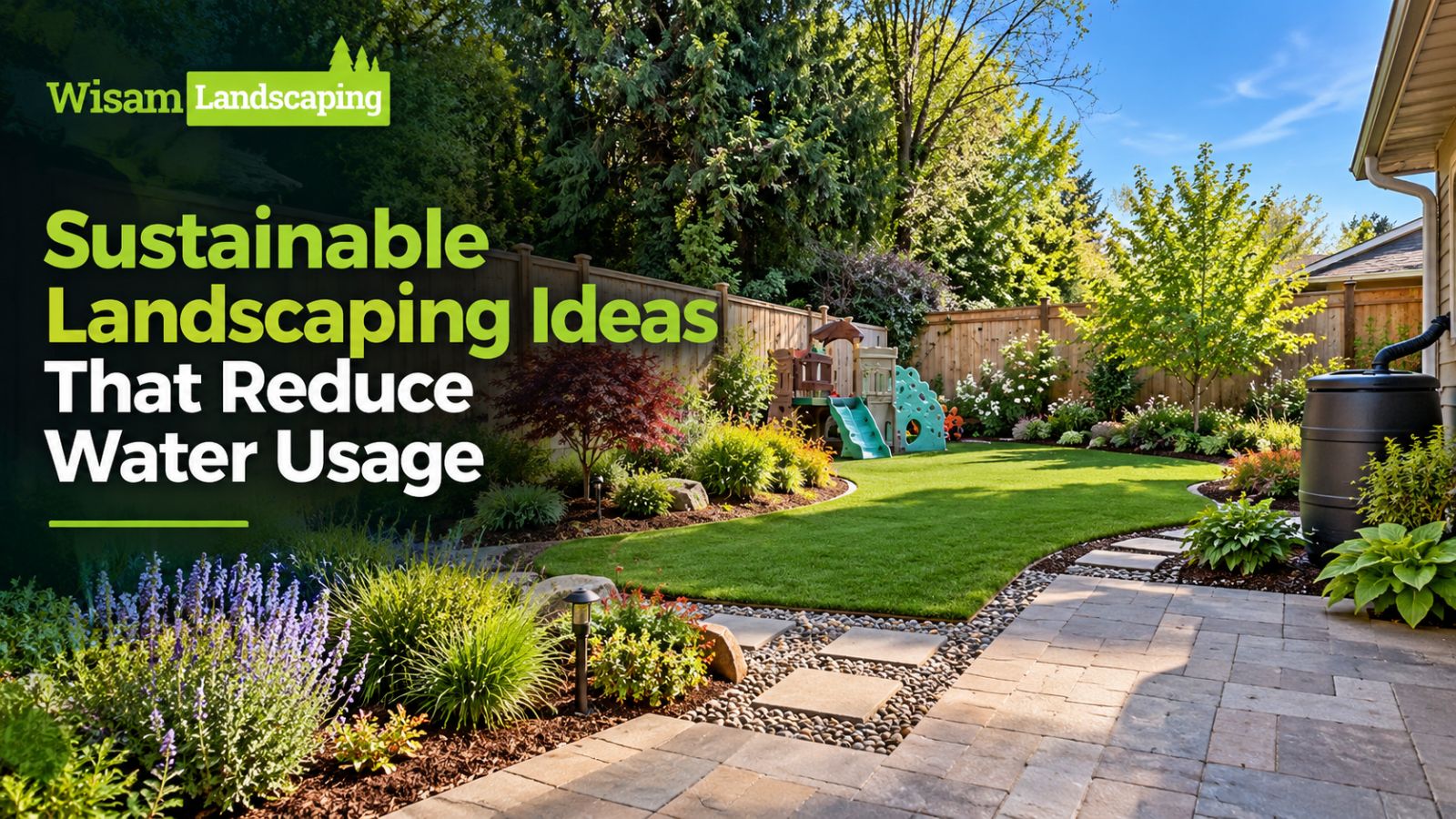
A beautiful garden does not need to consume large amounts of water to stay healthy. In Vancouver, where wet winters can give way to drier summer conditions, the key is designing outdoor spaces that work with the local climate rather than relying on frequent watering. Thoughtful plant selection, healthier soil, efficient irrigation and better rainwater management can all help create a garden that remains attractive while using water more responsibly.
Sustainable Landscaping Vancouver homeowners can benefit from starts with understanding how water moves through their property, which plants suit the site and how the garden will be used throughout the year. This Sustainable Landscaping Guide explains practical ways to reduce water usage while maintaining a welcoming, functional outdoor space.
Sustainable landscaping means designing, installing and maintaining an outdoor environment that makes responsible use of water, soil, plants and other natural resources. It is not simply about replacing a lawn with gravel or choosing plants that need little attention. A well-planned landscape balances appearance, usability, environmental conditions and long-term maintenance.
Vancouver’s climate makes this approach particularly useful. Winters are generally wet, while summer weather can bring extended dry periods. A garden that handles winter rainfall effectively may still struggle during summer if its soil dries quickly, its plants have shallow roots or its irrigation system distributes water inefficiently.
A garden’s water needs change throughout the year. Newly planted shrubs and trees often need regular watering while their roots establish, even when mature plants of the same species can tolerate drier conditions. Established plants may need less frequent irrigation, provided they are growing in suitable soil and have developed healthy root systems.
For example, a property with a sunny front garden, a shaded side passage and a vegetable patch should not automatically use one watering schedule for every area. The sunny garden may dry out quickly, while the shaded section retains moisture for longer. Separating these areas into appropriate watering zones helps avoid unnecessary water use and supports healthier plant growth.
Plant selection is one of the most effective ways to reduce irrigation once a garden is established. Drought-Tolerant Plants can withstand periods of limited moisture when they are suited to the local climate and planted in appropriate conditions. However, drought tolerance does not mean a plant never needs water. Newly planted specimens, plants growing in containers and those exposed to intense afternoon sun may still require careful attention.
A water-efficient garden should include plants that suit the property’s sunlight, soil drainage and exposure to wind. This reduces the need to compensate for unsuitable growing conditions through constant watering.
Before choosing plants, observe the garden at different times of day. A south-facing bed may receive substantial sunlight, while a narrow area beside a building may remain shaded. Soil conditions matter just as much. Some plants prefer freely draining soil, whereas others perform better in consistently moist ground.
Useful considerations include:
Native Plants can be valuable components of a water-conscious landscape because locally adapted species may be better suited to regional growing conditions. Their suitability still depends on the specific site, so native plants should not be assumed to thrive in every soil type or exposure.
For a Vancouver garden, a designer might consider appropriate native shrubs, groundcovers and flowering perennials after assessing the site. Native plants can also support local biodiversity by providing habitat and food for wildlife.
The practical lesson is to select plants based on their actual growing requirements rather than their appearance alone. A carefully chosen mix of native and other climate-appropriate plants can create a resilient garden without sacrificing colour, texture or seasonal variety.
Healthy soil plays a major role in reducing water consumption. It provides the environment in which roots grow, holds moisture between watering sessions and allows excess water to drain away. When soil is compacted, depleted of organic matter or poorly suited to the plants growing in it, water may run off the surface or move beyond the root zone before plants can use it.
Improving soil before planting is often easier than trying to correct problems after a garden has become established.
Compost can improve soil structure and support biological activity when incorporated appropriately. The amount and type of amendment depend on the existing soil, so a basic assessment can help determine what is needed. Adding organic matter indiscriminately is not always beneficial, particularly where drainage or soil nutrient levels are already suitable.
Mulch provides another useful layer of protection. Organic mulches, such as suitable bark or leaf-based materials, help reduce evaporation, moderate soil temperatures and limit weed growth. Apply mulch over the soil surface while keeping it away from direct contact with tree trunks and plant stems.
A practical approach includes:
For instance, a garden bed beneath a sunny window may dry quickly during summer. Adding suitable mulch can slow moisture loss and reduce how often the bed needs watering. However, mulch should not be used to conceal persistently waterlogged soil, which may require drainage improvements.
Repeated digging can disrupt soil structure and disturb plant roots. Once a garden bed has been prepared and planted, limit disturbance to what is genuinely necessary. Add organic matter where it is useful, control weeds before they spread and monitor drainage after heavy rainfall.
Good soil management does not eliminate irrigation, but it helps make better use of every watering session.
A water-efficient landscape is easier to maintain when its layout reflects the property’s natural conditions. Instead of treating the entire garden as one uniform space, group plants with similar moisture requirements and create separate areas for different uses.
This principle is especially helpful in gardens containing lawns, ornamental beds, trees, containers and edible plants. Each area has different watering needs, so a thoughtful layout makes irrigation more precise.
Planting species with similar moisture needs together is known as hydrozoning. It allows the gardener to water one section appropriately without overwatering another.
For example, drought-tolerant shrubs and established ornamental grasses may need less frequent irrigation than leafy vegetables. Keeping them in separate zones makes it easier to meet those requirements.
Hydrozoning can also guide irrigation equipment selection. A planted border may benefit from drip irrigation, while a small lawn may require a different system. Containers can be managed separately because they often dry out faster than plants growing directly in the ground.
Lawns can provide useful space for recreation, pets and outdoor activities, but large areas of turf may require substantial summer irrigation, depending on the grass species, soil and site conditions.
Consider where lawn is genuinely useful. A family may need an open patch for children to play, but narrow strips beside fences may offer little practical benefit. Those sections could be redesigned with suitable groundcovers, planted beds or other permeable surfaces.
The aim is not to remove every lawn. It is to allocate space according to how people actually use their gardens, reducing the need to water areas that serve no clear purpose.
Rainwater Management helps a property make better use of rainfall while reducing runoff and supporting plants during drier weather. Vancouver’s wetter seasons provide opportunities to capture and direct rainwater, but the system must be designed around the site’s drainage, soil and building layout.
Rainwater that runs directly from a roof or paved surface into a drain may offer little benefit to the garden. Where site conditions allow, some of that water can be directed towards planted areas or collected for later use.
Rain barrels can collect water from suitable downpipes for later garden irrigation. Use a secure, covered container with an appropriate overflow arrangement and follow local requirements. Collected water should be used for suitable outdoor purposes, and the system must not create standing-water or drainage problems.
Rain gardens are shallow, planted areas designed to receive and manage runoff from suitable surfaces. They can help slow water movement, encourage infiltration and create habitat when properly designed. Their success depends on soil permeability, the location of buildings, underground services and the amount of water entering the area.
A rain garden should not be installed where it could direct water towards foundations or create persistent ponding. Properties with heavy clay soil or challenging drainage may need a site assessment before work begins.
Water conservation should never come at the expense of property protection. Roof runoff, downpipes and paved surfaces need to be managed so that water does not accumulate beside buildings.
Check for blocked gutters, leaking downpipes, uneven paving and areas where water regularly pools. These problems can undermine a landscape’s performance and may cause moisture damage if left unresolved.
A successful water-management plan considers both sides of the problem: retaining useful moisture in planted areas and safely moving excess water away from structures.
Even a carefully designed garden may need supplemental watering during dry weather. The goal is to deliver water where plants need it, in a quantity that supports root growth without creating runoff or waterlogging.
Modern irrigation methods can help achieve this, but their effectiveness depends on correct installation, maintenance and scheduling. A poorly adjusted system can waste water even when it uses efficient equipment.
Drip irrigation delivers water slowly near plant roots through tubing and emitters. It can be useful for shrubs, vegetable beds and established planting areas because it reduces the need to wet large sections of ground unnecessarily.
For effective results:
Sprinklers may still be appropriate for lawns and other open areas. However, avoid watering during windy conditions, when evaporation is high or when water is likely to run off paved surfaces.
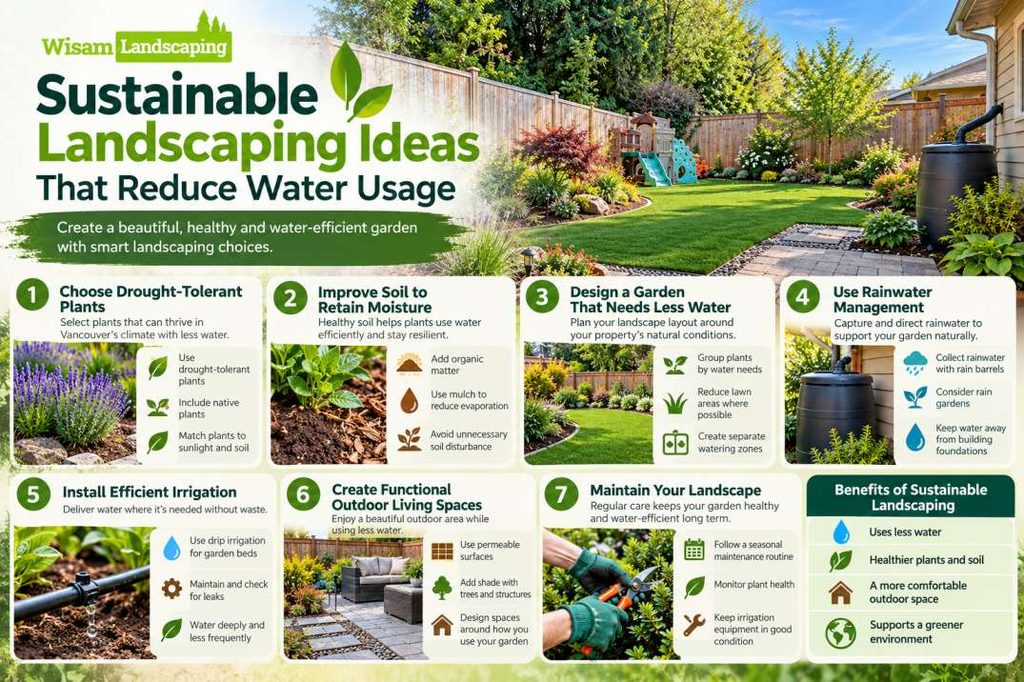
Frequent, shallow watering can encourage roots to remain near the surface, where soil dries more quickly. Depending on the plant species and soil, deeper watering followed by an appropriate interval between sessions can encourage roots to develop further into the ground.
There is no single watering schedule that works for every garden. Check the soil beneath the surface before watering, and observe the plants for signs of stress. Wilting can indicate a lack of moisture, but it may also result from excessive water or root problems. Diagnosing the cause prevents unnecessary irrigation.
A sustainable garden should support everyday life, not simply reduce water consumption. Thoughtful Outdoor Living design can create useful spaces for relaxing, dining, gardening and spending time with family while reducing the amount of land that requires intensive watering.
For example, a small backyard may benefit from a shaded seating area, a compact lawn and planting beds along the boundaries. This arrangement can provide several useful functions without filling the entire space with thirsty turf or seasonal plants.
Where appropriate, permeable paving, gravel paths and stepping stones can reduce the amount of water directed into conventional drainage systems. Their suitability depends on ground conditions, accessibility requirements and the intended use of the area.
Avoid covering every available surface with impermeable materials. Excessive hardscaping can increase runoff and reduce the area available for planting. A balanced design combines functional paved areas with healthy soil and vegetation.
Shade is another useful consideration. Well-positioned trees and structures can reduce direct sunlight on selected garden areas, helping some plants retain moisture for longer. Tree placement should account for mature size, root development, building clearances and overhead structures.
The best backyard designs begin with a clear understanding of how the household uses the space. When garden features serve practical purposes, there is less need to maintain unnecessary areas simply for appearance.
A garden that uses less water still needs regular attention. Plants change as they mature, irrigation equipment wears out, and weather conditions influence how quickly soil dries. Ongoing maintenance helps preserve the benefits of the original design.
Seasonal inspections are particularly useful in Vancouver, where rainfall patterns change considerably throughout the year.
Spring: Check drainage after winter rainfall, inspect irrigation equipment and prepare planting beds. Replace damaged mulch and identify plants that struggled during the previous season.
Summer: Monitor soil moisture, adjust irrigation according to weather conditions and remove weeds before they compete with established plants for water. Inspect newly planted trees and shrubs more frequently than mature specimens.
Autumn: Collect suitable fallen leaves for composting or mulch, assess drainage and prepare vulnerable plants for colder conditions. Check gutters and downpipes to ensure rainfall can move safely away from buildings.
Winter: Review the garden’s performance and plan improvements for the next growing season. Avoid unnecessary soil disturbance when the ground is saturated, and address drainage issues that repeatedly cause standing water.
Keep simple notes about watering frequency, plant health and areas that dry out quickly. These observations provide useful evidence for adjusting the garden over time.
Water-efficient gardening can become less effective when decisions are based on assumptions rather than actual site conditions.
The most reliable improvements usually come from observing the garden, identifying the cause of a problem and making targeted adjustments rather than changing everything at once.
A few practical habits can make a meaningful difference over time.
First, prioritise newly planted trees and shrubs during dry periods. Their roots may not yet reach deeper moisture, so temporary establishment watering can be more important than watering mature plants with established root systems.
Second, use rainfall as a guide rather than automatically following a fixed schedule. A week of cool, wet weather may reduce irrigation needs, while several hot, dry days can increase them. Rainfall alone does not tell the full story because dense foliage, roof overhangs and compacted soil can affect how much water reaches the roots.
Third, inspect the garden before changing the irrigation settings. Dry leaves do not always indicate drought, and yellowing plants may be affected by poor drainage or other growing conditions. Checking soil moisture and examining the roots when appropriate can help identify the real issue.
Finally, make improvements in stages. Start with obvious sources of water waste, such as leaking irrigation lines, unsuitable watering times or excessive lawn areas. Then consider soil improvements, plant replacements and rainwater-management features. This measured approach helps you understand which changes are working.
A well-designed landscape combines practical water management with the way people want to use their outdoor spaces. Wisam Landscaping can be considered when planning landscape improvements that account for planting choices, garden layout, drainage and long-term maintenance. The important first step is understanding the site’s existing conditions before deciding which changes are appropriate.
For homeowners exploring Landscape Design Vancouver, a site-specific assessment can help identify sunny and shaded areas, soil limitations, opportunities for rainwater management and plants suited to the property. A clear plan makes it easier to balance visual appeal, outdoor functionality and responsible water use without adding unnecessary complexity.
Reducing garden water usage is not about sacrificing greenery or outdoor comfort. It is about making informed decisions that help plants thrive with less unnecessary irrigation. Choosing suitable plants, improving soil, applying mulch, managing rainfall and maintaining efficient irrigation all contribute to a healthier landscape.
This Sustainable Landscaping Guide provides a starting point for building a garden that responds to Vancouver’s seasonal conditions. By observing how your property handles rainfall and summer dryness, you can make gradual improvements that support both practical water conservation and an attractive outdoor environment. With thoughtful planning and consistent maintenance, a sustainable garden can remain useful, welcoming and resilient throughout the year.
Start by checking where water is being wasted. Look for leaking irrigation equipment, runoff from paved surfaces and areas that receive more water than necessary. Then assess soil quality, mulch coverage and plant selection. Grouping plants according to their moisture requirements and adjusting watering based on soil conditions can improve efficiency. Newly planted specimens still need appropriate establishment watering, even when they are drought-tolerant.
Suitable choices depend on sunlight, soil drainage, exposure and the amount of maintenance you can provide. Some native plants and climate-appropriate ornamental species can tolerate drier summer conditions once established. However, a plant suited to a sunny, well-drained border may struggle in a shaded, waterlogged corner. Select plants according to the specific growing conditions and check their mature size, moisture requirements and seasonal characteristics before planting.
Yes, suitable mulch can reduce evaporation from exposed soil, moderate soil temperatures and suppress competing weeds. These benefits can help the soil retain useful moisture between watering sessions. Apply mulch evenly and keep it away from direct contact with stems and tree trunks. Mulch does not replace irrigation during prolonged dry weather, and soil moisture should still be checked before watering to avoid keeping the root zone excessively wet.
Rainwater harvesting can provide a useful supplementary source of water for suitable garden uses. A covered rain barrel connected to an appropriate downpipe can collect rainfall for later irrigation. Before installing one, consider overflow management, container security and local requirements. Rain gardens can also manage runoff where soil and site conditions are suitable. Neither approach should direct water towards building foundations or create persistent standing water.
Landscape design determines how much of a property needs irrigation and how effectively rainfall is used. Grouping plants with similar moisture needs, reducing unnecessary lawn areas, improving soil and positioning trees for suitable shade can reduce water demand. Efficient irrigation and appropriate drainage support these measures. For Sustainable Landscaping Vancouver, the most effective design is one that responds to the site’s conditions and the household’s needs rather than relying on a standard layout.