

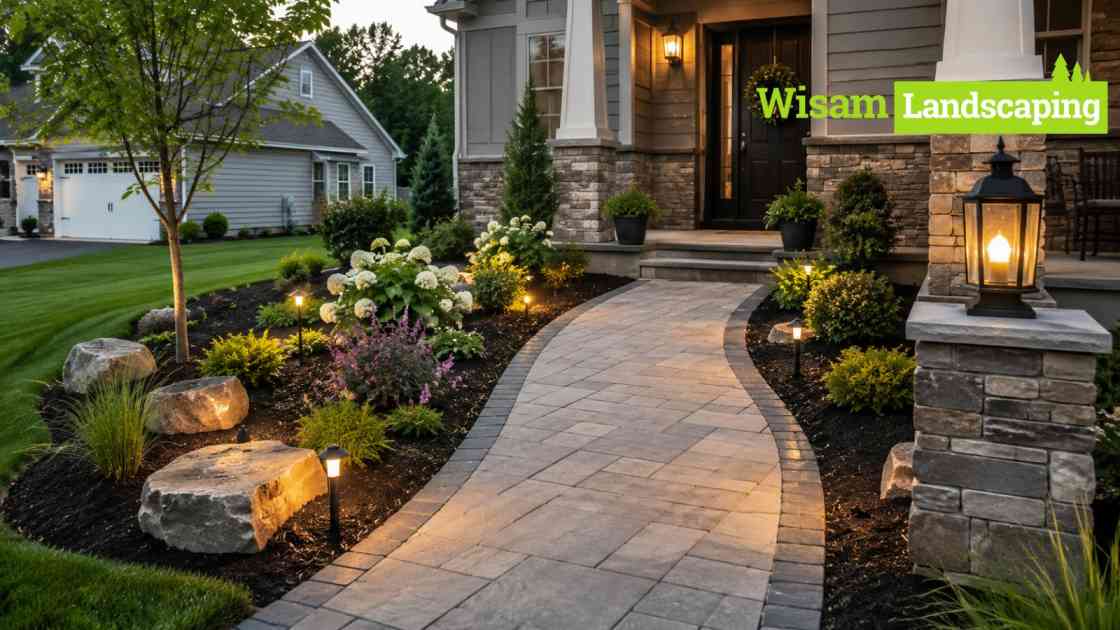
A walkway does more than connect your driveway to your front door. It helps establish the first impression of your property, guides visitors naturally through the landscape, and can make an otherwise ordinary exterior feel considered and complete.
For Vancouver homeowners, the right walkway also needs to work with the local environment. Frequent rainfall, shaded areas, mature trees, changing temperatures, and different soil conditions can all influence how a path should be designed and installed.
The good news is that improving curb appeal does not necessarily mean undertaking a complete landscape renovation. A thoughtfully planned Walkway Installation in Vancouver can make a noticeable difference by combining practical access with materials, proportions, planting, and details that complement the home.
Whether you are replacing an aging concrete path, creating a new entrance through the garden, or planning a complete front-yard update, these Walkway Design Ideas can help you make better decisions before construction begins.
A front walkway is one of the first landscape features people notice when approaching a property. If it is cracked, narrow, poorly aligned, or surrounded by overgrown planting, even an attractive house can appear less maintained.
A well-designed path does the opposite. It creates visual direction and gives the front yard structure.
A successful walkway should generally do three things:
There is also an important distinction between simply installing a path and designing one properly.
For example, placing a straight concrete strip from the sidewalk to the front door may solve an access problem, but it might not improve the character of the property. Introducing gentle curves, contrasting borders, suitable planting, or natural materials can turn that same functional route into an important landscape feature.
During Walkway Installation in Vancouver, these details should be considered before excavation begins because changing the layout later can be considerably more difficult and expensive.
The best design depends on the home’s architecture, lot dimensions, existing landscaping, and how people actually use the property.
Here are several approaches worth considering.
The walkway should make it immediately obvious where visitors are supposed to go.
A common mistake is creating a path that feels disconnected from the driveway, sidewalk, porch, or front entrance. Even a beautiful material can look awkward when the route does not make sense.
Consider:
The path does not always need to be perfectly straight. A subtle curve can work particularly well in larger gardens, while a straight layout often suits contemporary homes.
The important point is that the shape should have a purpose rather than being curved simply for decoration.
Scale matters more than many homeowners expect.
A narrow path can feel uncomfortable in front of a large house, while an oversized walkway may dominate a compact front yard.
Think about the number of people using the path at the same time and whether someone needs to walk comfortably while carrying groceries, pushing a stroller, or assisting another person.
A wider entrance route can also create a more substantial visual presence, particularly when the walkway leads toward a prominent porch or front door.
A Garden Path can serve a different purpose from a primary front entrance walkway.
Instead of simply directing visitors toward the front door, garden paths can encourage people to explore different parts of the landscape.
For example, a path could connect:
Curved paths can make a garden feel more relaxed and natural. However, overly complicated curves can become difficult to navigate and may look artificial.
A useful approach is to create broad, gentle bends that reveal different sections of the landscape.
You can also position plants slightly into the curve so that the destination is not visible immediately. This creates a subtle sense of discovery without making the route confusing.
Vancouver’s landscape changes throughout the year. Plants may grow significantly during the wetter months, while shaded areas can remain damp for extended periods.
When planning Garden Path Installation in Vancouver, leave enough room around the path for mature planting rather than designing only around the plants’ current size.
This reduces future maintenance problems and helps preserve the intended shape of the pathway.
A Stone Walkway can add texture and visual character that manufactured materials may not provide.
Natural stone is especially useful when the goal is to create a landscape that feels connected to the surrounding environment.
Popular design approaches include:
Natural Stone has variations in colour, texture, edges, and surface character. These differences can help a walkway feel less manufactured and more integrated into a garden.
However, natural stone is not automatically the best choice for every property.
The type of stone, thickness, base preparation, drainage, installation method, and expected foot traffic all matter.
A professional should also consider whether the selected surface becomes slippery when wet and whether its texture is appropriate for people who may have mobility concerns.
A visually attractive material that performs poorly in Vancouver’s wet conditions is not a successful design.
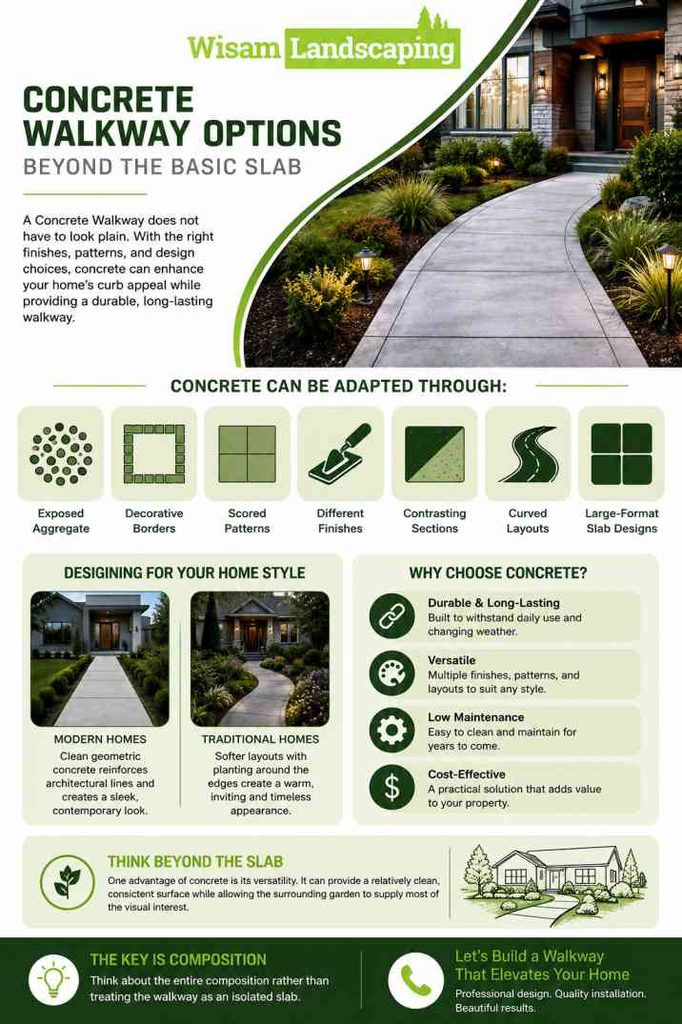
A Concrete Walkway does not have to look plain.
Concrete can be adapted through:
For modern homes, clean geometric concrete can reinforce the property’s architectural lines.
For more traditional houses, a softer layout with planting around the edges may produce a better result.
One advantage of concrete is its versatility. It can provide a relatively clean, consistent surface while allowing the surrounding garden to supply most of the visual interest.
The key is to think about the entire composition rather than treating the walkway as an isolated slab.
A Pathway leading to the front entrance has different requirements from a lightly used garden trail.
Before selecting materials, consider the intended use.
For a primary entrance, prioritize:
A secondary garden route may allow more flexibility.
Gravel, stepping stones, compacted aggregate, or informal natural stone can work well when the path is mainly decorative or used occasionally.
This is where practical landscape planning becomes important. Not every section of a property needs the same material.
Combining two complementary surfaces can actually create a more interesting design while helping control project costs.
Hardscaping refers to the constructed elements of a landscape, including walkways, patios, retaining walls, steps, edging, and other non-plant features.
A walkway can become much more effective when it is considered as part of the wider hardscape.
For example, imagine a home with:
Using compatible textures and proportions can make these individual features appear to belong to one coordinated design.
The goal is not necessarily to match every material exactly. Instead, look for relationships in colour, texture, shape, and scale.
Decorative Walkways are particularly effective when the path itself becomes a visual feature.
There are many ways to introduce character without making the design excessive.
A simple border can visually define the walkway.
For example, a central concrete surface paired with darker stone edging can create a crisp outline. Similarly, natural stone surrounded by gravel can produce a softer transition into the garden.
Pattern can be created through:
Pattern should support the architecture rather than compete with it.
Plants can soften hard surfaces and make the walkway feel more connected to the landscape.
Low-growing plants are often useful beside paths because they can provide texture without significantly obstructing movement.
However, planting should be selected with mature growth and maintenance requirements in mind.
The walkway and front door should work together.
A beautifully installed path can still feel underwhelming if it leads to an entrance that lacks definition.
A thoughtful Front Entrance Design might include:
One practical technique is to slightly widen the walkway as it approaches the entrance. This creates a natural transition area and gives the front door greater visual importance.
The entrance should feel like the destination rather than simply the end of a strip of paving.
Drainage is one of the most important practical considerations for Vancouver properties.
Rainwater needs somewhere to go. If a walkway is installed without properly considering existing grades and drainage patterns, water can collect around the path, adjacent planting, or building foundations.
Before installation, assess:
Depending on the property, appropriate grading, drainage solutions, or permeable materials may help manage runoff.
This is one area where appearance should never take priority over performance.
A quality installation begins before the first paver or slab is placed.
The installer should examine the current conditions rather than immediately proposing a material.
This includes looking at access, drainage, soil, existing hardscape, vegetation, slopes, and the condition of any existing path.
The proposed route should be marked out so the homeowner can see how the walkway will interact with the property.
This is often when problems with scale become obvious.
A path that looked appropriate on paper may feel too narrow, too dominant, or awkward when physically marked on the ground.
Base preparation is critical to long-term performance.
Depending on the chosen material and site conditions, the installation may involve excavation, appropriate base material, compaction, grading, and edge restraint.
Skipping or reducing preparation can contribute to settlement, movement, uneven surfaces, and drainage problems.
The final material is installed according to its requirements.
Natural stone, concrete, pavers, and aggregate each have different installation considerations.
The finished surface should transition safely into the driveway, lawn, garden beds, steps, and entrance area.
These transitions often determine whether the finished project feels professionally integrated.
Even attractive materials can produce poor results when the planning is inadequate.
A narrow path may technically provide access but can feel uncomfortable when two people approach from opposite directions.
Plants rarely stay the size they are when installed. Allow for future growth to prevent paths from becoming visually or physically crowded.
A material that looks excellent in a showroom may not be suitable for a wet, shaded location.
Always consider traction, maintenance, drainage, durability, and cleaning requirements.
A walkway that looks beautiful during the day still needs to be safe after dark.
Low-voltage landscape lighting can help identify changes in elevation, steps, turns, and the entrance.
Too many patterns, materials, borders, or colours can make a walkway visually chaotic.
In many cases, one quality material combined with thoughtful landscaping produces a stronger result than several competing finishes.
There is no universal walkway style that suits every property.
Consider:
Consider:
Keep the design visually simple.
A straightforward path with carefully selected planting can make a compact space feel larger rather than filling it with too many hardscape elements.
A larger yard provides more opportunity to create a destination-based route.
You might use a primary walkway toward the front door and secondary Landscape Pathways connecting different garden areas.
From a practical standpoint, homeowners can avoid many problems by answering a few questions before installation.
Where will people actually walk?
Do not design purely around symmetry. Observe existing foot traffic and natural movement.
Where does rainwater go?
Understand drainage before selecting the final layout and materials.
Will the surrounding plants mature significantly?
Leave adequate space for growth.
Does the material suit the house?
A walkway should complement the home’s exterior rather than look like an unrelated addition.
How much maintenance are you willing to perform?
Some surfaces require more cleaning, joint maintenance, weed control, or periodic attention than others.
Will the walkway still work several years from now?
Think beyond the installation date. Good landscape design should account for changing plants, weather exposure, household needs, and normal wear.
For homeowners considering Walkway Installation in Vancouver, the strongest results come from treating the project as both a landscape-design decision and a construction project.
Wisam Landscaping can help homeowners think through the relationship between the walkway, entrance, garden beds, existing hardscape, drainage, and overall property appearance.
The objective should not simply be to install an attractive surface. It should be to create a route that feels natural to use, complements the property, and continues to perform in Vancouver’s conditions.
Whether the project involves a straightforward concrete route, a natural-stone feature, or a more detailed garden connection, careful planning can make the difference between a path that merely functions and one that genuinely improves the property.
A walkway may occupy only a small percentage of your property, but it can have a disproportionately large effect on curb appeal.
The strongest Walkway Design Ideas combine aesthetics with practical considerations such as drainage, safety, accessibility, maintenance, scale, and long-term durability. For Vancouver homeowners, local weather and site conditions make those considerations particularly important.
Instead of choosing a material first and figuring everything else out afterward, begin with how the space needs to function. Consider where people walk, how water moves across the property, how plants will mature, and how the path connects the street, driveway, garden, and front entrance.
With thoughtful planning and proper installation, a new Walkway Installation in Vancouver can do more than improve appearance. It can make the property easier to navigate, strengthen the connection between the home and landscape, and create a more welcoming arrival experience.
For homeowners exploring Garden Path Installation in Vancouver, the same principle applies: good design starts with the site, not simply the surface material. A path that looks right, drains properly, feels comfortable underfoot, and works naturally with the surrounding landscape is ultimately a better investment.
There is no single best material for every Vancouver property. Concrete, natural stone, pavers, and aggregate can all work when properly selected and installed. The decision should consider drainage, slope, exposure to rainfall, foot traffic, maintenance expectations, appearance, and the home’s architectural style. For wet or shaded areas, surface texture and slip resistance deserve particular attention.
Focus on proportion and detailing rather than simply choosing the most expensive material. A well-defined edge, appropriate pathway width, attractive planting, subtle lighting, and a clean transition into the entrance can make a substantial difference. Replacing an uneven old path with a simple, well-installed material can also have more visual impact than adding elaborate decorative features.
Yes, natural stone can be an excellent option for garden paths, provided the material and installation method are appropriate for the site. The installer should consider surface texture, drainage, stone thickness, base preparation, slope, and expected use. In damp or shaded locations, selecting a suitable surface and maintaining it properly becomes especially important.
It depends on the property and the purpose of the path. Straight walkways often complement contemporary architecture and create a direct route to the entrance. Curved paths can work well in gardens and larger landscapes because they create a softer transition and can reveal different planting areas gradually. The curve should still feel intentional and provide a comfortable route.
Start with performance and site requirements, then consider aesthetics and budget. A Stone Walkway provides natural variation and texture, making it useful for traditional, rustic, or garden-focused landscapes. A Concrete Walkway offers a consistent surface and can be adapted to modern or traditional properties through finishes, borders, and layout. Neither is automatically better; the right choice depends on the specific property and how the walkway will be used.