

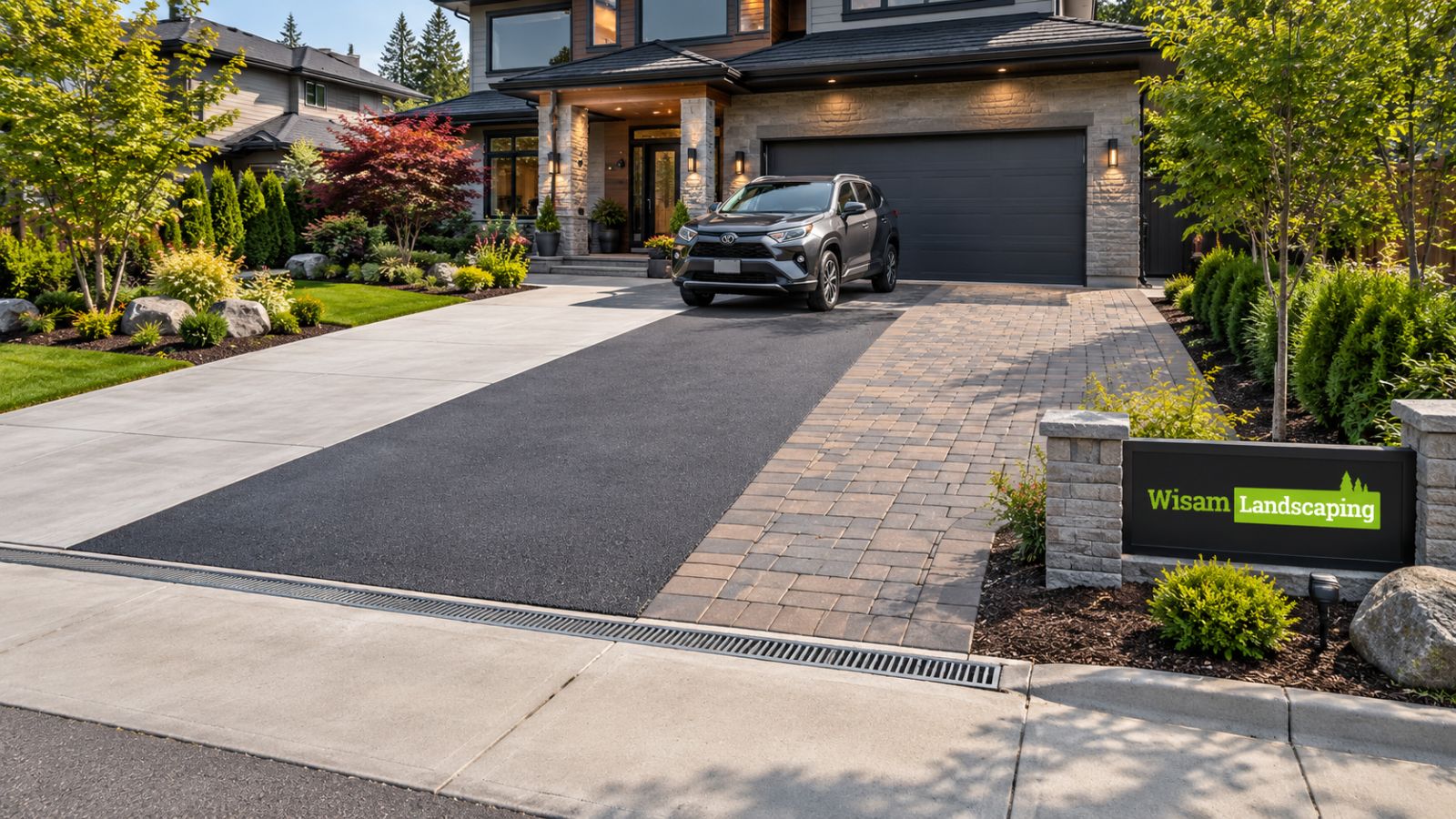
Apart from being a parking space for your automobile, a driveway is one of the many features of a home that visitors notice first. What is most important is for your driveway to be right for your home, budget, traffic, and maintenance requirements. Concrete, asphalt, and pavers are among the most popular materials for driveways. All three have their own pros and cons. There is no one-size-fits-all solution when it comes to choosing driveway materials.
To illustrate, a homeowner interested in an easy-to-clean driveway surface might want concrete. Someone looking for a lower upfront cost may consider asphalt. Pavers may suit a property where appearance and design flexibility are important.
This guide compares the 3 options in simple terms. It also explains durability, maintenance, installation, cost factors, and design choices. A driveway installation in Vancouver will ensure durability when good materials are used.
Start by looking at how the driveway will be used. A driveway for 1 family car has different needs from one used by 3 or 4 vehicles every day.
Think about these factors:
The existing ground also matters. A good surface can still develop problems if the base is poorly prepared. Drainage can also affect long-term performance.
This is why driveway installation in Vancouver should begin with proper site preparation rather than simply choosing a surface material.
Concrete driveway is a popular choice for residential purposes. It provides a hard, solid surface. It can also create a clean appearance around modern and traditional homes.
Concrete can be finished in different ways. Plain concrete is one option. Decorative finishes can provide a different look. One benefit is design flexibility. Concrete can also be formed into different shapes where the site allows it.
However, concrete requires proper preparation and installation. Concrete is also not completely maintenance-free. Small cracks should be monitored. Larger damage may require professional assessment.
Concrete may suit homeowners who need a tough and low-maintenance surface. This material may also suit people who like a neat surface.
In addition, concrete may be used when there is a need for a wide driveway or a property whose surface should support the movement of vehicles regularly.
The final product will greatly depend on the foundation, drainage system, quality of concrete, finishing, and installation procedure.
Another common driveway material is asphalt. This surface has a dark and smooth appearance. It may suit many homes.
One benefit of this material is the installation procedure, which may be faster than in other types of driveways. The duration will depend on the size of the area and weather, among other factors.
In addition, this material provides a comfortable surface to drive. Just like the other materials, asphalt should be properly prepared. Drainage is one important factor to consider, as water may cause problems on the surface. This material will also soften under very high temperatures and may require maintenance as it gets older.
Asphalt may suit many people who need a practical surface with a neat appearance.
It may be suitable for:
Maintenance requirements will depend on the surface condition and local conditions.
The pavers provide more design options compared to most other surfaces used for driveways. There are many variations in terms of their shape, size, colour, texture, and pattern. That is why they serve well in cases when the aesthetic factor is important.
In addition, it is possible to repair the pavers selectively. If some of them get damaged, it is possible to replace only those units instead of replacing the whole surface. However, proper installation of the pavers is crucial.
The proper preparation of the base as well as correct laying of the pavers is required. Otherwise, they can move, or gaps may form. Gaps can occur because of weeds growing between them due to insufficient maintenance of the driveway.
Pavers may be suitable for those homeowners who want a decorative driveway.
They can work well with:
They can also be combined with other hardscaping elements to create a consistent outdoor design.
Each option has a different set of benefits.
| Feature | Concrete | Asphalt | Pavers |
| Appearance | Clean and versatile | Simple and dark | Highly decorative |
| Design options | Moderate to high | Limited | Very high |
| Maintenance | Moderate | Moderate | Moderate |
| Repairs | Can require section repair | Can be patched | Individual pavers can often be replaced |
| Installation | Requires proper curing | Often relatively quick | Detailed installation |
| Upfront cost | Varies | Often lower than some decorative options | Can be higher |
| Customisation | Good | Limited | Excellent |
Durability is one of the main concerns when selecting driveway materials. But durability is not only about the material itself. The base underneath the driveway is extremely important. For example, a driveway can develop settlement if the ground is not prepared properly. Water can also create problems if it cannot drain correctly.
The expected performance of a driveway depends on:
Ask how it will perform on your particular property.
Water is an important consideration for any driveway project. Water needs a suitable path to drain away from the surface. Standing water can create problems over time. It can also affect the base beneath some driveway surfaces. Before installation, consider where rainwater will go.
Look at:
There is no single installation cost for a driveway. The total cost can change based on several factors. The first factor is size. A 20-square-metre driveway will usually require less material and labour than a 60-square-metre driveway.
Other cost factors include:
A driveway is not finished when the installer leaves. Different surfaces need different forms of care. Concrete should be checked for cracks and surface damage. Asphalt may need repairs or maintenance as it ages. Pavers may need joint maintenance and occasional replacement of damaged units. Regular inspection can help you spot small problems. For example, check the driveway 2–4 times each year.
Look for:
The earlier you notice a problem, the easier it may be to assess.
Pavers can be combined with other hardscaping features. You might use matching materials around pathways, garden edges, or entrance areas. This can create a more connected outdoor design.
However, decorative features can increase project costs. More complex patterns also require additional planning and installation time. Keep practical use in mind. A driveway should still provide a safe and suitable surface for vehicles.
A good installation starts before the surface material is placed.
The process may include:
The installer reviews the property, ground, access, slope, and drainage.
The driveway is measured to establish the required surface area.
Unsuitable material may need to be removed.
A suitable base is prepared and compacted.
Water flow is considered before the final surface is installed.
Concrete, asphalt, or pavers are installed according to the selected method.
Edges, joints, levels, and surface details are completed.
The finished driveway should be checked before the project is considered complete. The exact process varies between materials and properties.
There are several mistakes homeowners should avoid.
The cheapest quotation may not include the same preparation or materials as another quote.
A beautiful surface can still experience problems if water is not managed correctly.
The surface depends on the quality of the base beneath it.
Consider traffic, appearance, maintenance, and budget before making a decision.
Make sure excavation, disposal, edging, drainage, and finishing are clearly listed.
Think about how the driveway may be used in 5 or 10 years.
Choosing between driveway materials like concrete, asphalt, and pavers is not simply about appearance. Think about how the driveway will be used. Consider the size, traffic, drainage, maintenance, design, and budget.
Concrete offers a clean and versatile surface. Asphalt provides a practical option with a simple appearance. Pavers offer strong design flexibility and can allow individual units to be replaced when damaged.
The quality of driveway installation in Vancouver also matters. Good ground preparation, suitable drainage, correct materials, and experienced workmanship can all affect the finished result. Take time to compare your options. Wisam Landscaping is a famous agency that can offer you the best driveways.
It depends on each case individually. All three options: concrete, asphalt, and pavers – can serve for many years, provided that installation and maintenance are done right.
In some cases, asphalt is cheaper, while in others, concrete is. The factors that influence the price include the size of the driveway, the amount of excavation work, preparation of a good base, drainage, and other things.
Yes. Pavers can be used for many residential driveways. They offer many design choices. Individual damaged pavers can often be replaced. However, proper base preparation and installation are important.
A basic inspection 2-4 times a year will allow you to detect such things as cracks, uneven surfaces, standing water, loose pavers, potholes, and any edge damage. Seek out professional advice if you find some major changes.
Proper preparation is crucial. The ground, base, drainage, and surface must all be taken into consideration. A good surface cannot make up for inadequate preparation below it.