

Choosing the right paving material involves more than picking a colour that matches your home. The pavers you select affect drainage, durability, maintenance, comfort underfoot and how well your outdoor space handles everyday use. In Vancouver, where frequent rainfall and changing seasonal conditions can influence outdoor surfaces, selecting suitable materials and preparing the ground correctly are especially important. Whether you’re planning a relaxing patio, a garden walkway or a driveway that supports regular vehicle traffic, understanding your options for Paver Installation Vancouver can help you make a practical, long-lasting investment.
The key is to match the paving material to the job. A surface that works beautifully around an outdoor dining area may not be suitable for a driveway, and an attractive stone pathway may require different preparation from a large paved entertaining space.
Pavers form the visible surface of an outdoor area, but their performance depends on more than appearance. Material strength, thickness, surface texture, installation methods and the condition of the ground underneath all influence how well the finished surface performs.
For example, a family patio needs a stable, comfortable surface for chairs, tables and regular foot traffic. A driveway must withstand vehicle weight and turning forces, which place considerably more stress on the paving and its foundation. A garden walkway may need to fit around planting beds while providing safe access in wet weather.
The local environment also matters. Vancouver’s rainfall makes water management an important part of planning. Poor grading, inadequate drainage or a weak base can contribute to standing water, shifting pavers and uneven surfaces. Choosing suitable materials and addressing these issues before installation can help reduce avoidable maintenance.
A well-planned paving project balances four considerations: intended use, appearance, site conditions and long-term upkeep. Considering all four before purchasing materials makes it easier to compare options fairly.
Different paving materials offer different advantages. The right choice depends on the project rather than on one material being universally better than another.
Concrete pavers are manufactured in a range of shapes, sizes, colours and textures. This makes them suitable for many residential applications, including patios, walkways and driveways when the products are specified for the intended loads.
Their consistent dimensions can simplify layout planning, while modular construction allows individual units to be lifted and replaced if they become damaged or need access for underlying services. This can be useful in outdoor areas where future repairs are possible.
However, concrete pavers are not maintenance-free. Colour can change with weathering, joints may require replenishment, and some finishes can show stains more readily than others. When comparing products, check the manufacturer’s specifications, surface finish, expected maintenance and suitability for your particular application.
Natural Stone, such as granite, slate and certain limestone products, offers natural variations in colour, texture and pattern. These variations can create a distinctive appearance that works well with established gardens, contemporary homes and outdoor entertaining areas.
Stone selection requires careful attention to the specific material. Some stones are more porous than others, while certain finishes can become slippery when wet. Thickness, strength, weather resistance and the supplier’s recommended installation method should be checked before purchase.
For instance, a textured stone may suit a garden walkway where grip is important, while a more uniform finish may work well around a carefully designed patio. The best option depends on the stone’s characteristics, the intended use and the maintenance the homeowner is prepared to undertake.
Decorative Pavers can introduce visual interest through contrasting colours, patterns, borders and different surface textures. They can define an outdoor dining area, create a transition between a patio and lawn, or give a driveway a more finished appearance.
The important point is to use decorative features purposefully. Too many colours or competing patterns can make a small area feel cluttered. A restrained combination of complementary shades often produces a more cohesive result.
Decorative pavers should also meet the performance requirements of the space. A visually attractive product is not automatically suitable for vehicle traffic or a frequently wet location. Confirm the manufacturer’s recommendations before committing to a particular design.
The Best Pavers for Patios are those that suit how you plan to use the space, how much exposure it receives and the appearance you want to achieve. A covered patio used for outdoor dining has different requirements from an uncovered entertaining area exposed to rain throughout the year.
Before selecting a product, consider furniture placement, foot traffic, access to the house and the relationship between the patio and the garden. Larger-format pavers can create a clean, spacious appearance, while smaller units offer more flexibility around curves and irregular edges. The choice should also account for cutting requirements and the overall installation budget.
A successful Patio Design considers both the finished appearance and what happens to rainwater. The surface should be graded appropriately so water moves away from the home and does not collect near doorways, foundations or frequently used seating areas. The correct solution depends on the site’s slope, soil and existing drainage arrangements.
Surface texture matters, too. A very smooth finish may be less suitable for an exposed patio that becomes wet regularly. Look for products recommended for outdoor use and assess their slip resistance under the conditions in which they will be installed.
For example, a homeowner planning an outdoor dining area might choose textured concrete pavers in a neutral shade, with a contrasting border to define the seating zone. This creates a practical surface without making the patio compete visually with the garden.
Paver colour influences how an outdoor space connects with the house. Warm beige and brown tones can complement timber features, while grey and charcoal finishes often suit modern architecture. Light colours may make a compact patio feel more open, although they can show certain marks and stains more clearly.
The laying pattern also affects the finished result. Running-bond patterns can create a straightforward, familiar appearance, while herringbone layouts add visual movement. Larger pavers may reduce the number of visible joints, but they require accurate preparation and careful handling.
Before ordering, ask for samples and view them outdoors in different lighting conditions. A colour that looks subtle in a showroom may appear quite different beside your home’s exterior cladding, garden plants or fencing.
A walkway should provide a clear, comfortable route between the driveway, front entrance, garden, patio and other frequently used areas. Its width, alignment and surface finish all affect how easily people can move through the property.
Smaller concrete pavers can be useful where a path needs to follow a curved garden edge. Larger slabs can suit direct routes through contemporary landscapes. Natural stone can also complement planting beds and mature gardens, particularly when its colour and texture work with the surrounding materials.
In wet conditions, surface grip and stability deserve particular attention. Avoid selecting a finish based solely on appearance, and make sure the paving remains even where people walk regularly. Sloping sections may require additional design consideration, especially where accessibility and safe movement are priorities.
Good Landscaping brings paving, plants, lawn and garden structures together rather than treating each feature separately. A pathway can guide visitors towards the entrance, frame a planting bed or connect a patio with a quieter garden area.
The choice of Hardscape Materials should support this relationship. For example, matching the walkway to the patio creates continuity, while a contrasting border can distinguish the path from surrounding paving. Gravel, retaining walls and planting can also be incorporated where appropriate to the site.
A practical approach is to select one dominant paving material and use a second material sparingly for borders or transitions. This helps the garden feel coordinated without making the design unnecessarily complicated. Leave adequate space for planting growth and ensure soil or mulch will not continually spill onto the paved surface.
Driveways place greater demands on paving than most pedestrian areas. Vehicle weight, braking and turning can put pressure on individual units and the base beneath them. For this reason, choosing a suitable product and constructing a stable foundation are essential.
Concrete pavers and certain natural stone products can be used for driveways when they meet the required strength, thickness and installation specifications. However, a product suitable for a garden path should not automatically be assumed to support vehicles.
Before installation, assess the existing ground, anticipated vehicle loads, slope, drainage and access requirements. The base material, compaction and edge restraints should be specified for the application. These components help distribute loads and reduce the likelihood of movement.
Interlocking Pavers Vancouver projects require particular attention to the relationship between the paving units, jointing material, edge restraints and compacted base. Interlocking systems can distribute loads effectively when installed according to the product’s requirements, but the term interlocking does not guarantee that a driveway will remain stable under every condition.
Consider a sloped driveway that receives regular rainfall. If the base is poorly compacted or water collects beneath the paving, sections may settle or move over time. Correct grading, appropriate drainage and suitable edge restraints help address these risks before the surface is completed.
Interlocking systems can also offer a practical repair advantage: individual units may be lifted and reinstated when access to underground services is needed. The success of that repair depends on restoring the base properly and reinstalling the units with the correct jointing and compaction methods.
For homeowners comparing Paver Installation Vancouver options, the installation specification deserves as much attention as the product brochure. Ask how the contractor will prepare the ground, manage runoff and accommodate the loads the driveway is expected to carry.
Even high-quality pavers can perform poorly when the planning and installation are inadequate. One common mistake is choosing a material based entirely on colour or price without checking whether it is suitable for the intended use. A product designed for pedestrian areas may not be appropriate for vehicle traffic, while some decorative finishes need more frequent cleaning than homeowners expect.
Another mistake is underestimating ground preparation. Installing pavers over an unstable or poorly compacted base can lead to settlement, uneven joints and surface movement. Ignoring drainage can also allow water to collect in unwanted areas. These problems may require lifting sections of paving and rebuilding the affected foundation rather than simply replacing a few units.
Homeowners should also avoid ordering materials without confirming quantities, dimensions, cutting requirements and availability. Keeping a small quantity of spare pavers from the same product range can be useful for future repairs, particularly if colours or product lines change. A little planning before installation can help prevent unnecessary expense later.
Before purchasing materials, walk through the property and identify the purpose of each paved area. Note where vehicles turn, where people regularly walk, where furniture will sit and where water tends to collect after rain. These observations help establish the design requirements before material selection begins.
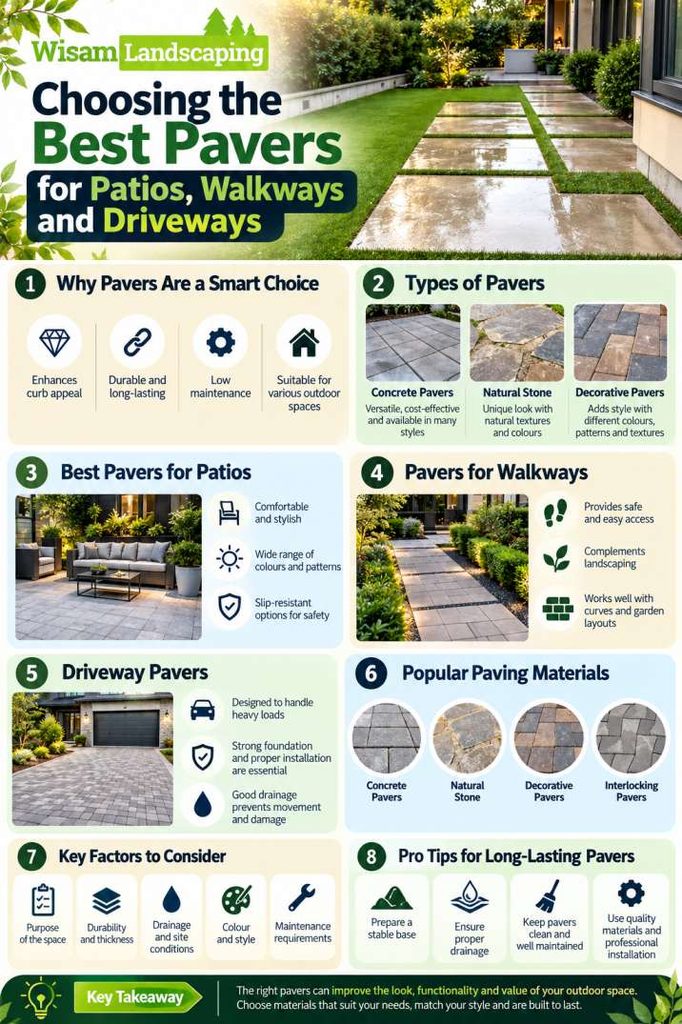
Use the following checklist when comparing paving options:
It is also worth discussing construction details before work begins. A written scope should identify the proposed materials, preparation method, drainage arrangements and finishing work. This gives homeowners a clearer basis for comparing quotations and understanding what the completed project should include.
Long-term performance depends on choosing appropriate materials, installing them correctly and maintaining the surface according to the manufacturer’s recommendations. Regularly remove leaves, soil and other debris before they accumulate in joints or create staining. Check for loose units, deteriorating jointing material and areas where water begins to collect.
Cleaning methods should suit the paving material. Aggressive pressure washing can dislodge jointing material or damage certain stone finishes, while unsuitable cleaners may alter the surface colour. Test cleaning products in an inconspicuous area and follow the manufacturer’s instructions.
If a section becomes uneven, investigate the cause rather than simply adding material to the top. Settlement, drainage problems and edge movement may require different repairs. Addressing the underlying issue is generally more effective than repeatedly correcting the visible symptom.
A final practical consideration is consistency. If the patio, walkway and driveway are being installed as part of one larger project, coordinate the materials and levels before construction starts. This can create smoother transitions, a more unified appearance and fewer awkward changes in height between outdoor areas.
The right paving project starts with understanding how each space will be used. Patios need comfortable, attractive surfaces; walkways require safe access and a logical layout; and driveways need materials and foundations that can withstand vehicle loads. In every case, drainage, ground preparation and realistic maintenance expectations are just as important as appearance.
Choosing the Best Pavers for Patios, walkways and driveways becomes easier when you compare materials according to their intended use, site conditions and long-term requirements. With careful planning, suitable Hardscape Materials and quality installation, paving can improve the usability and visual appeal of your outdoor space for years to come.
For homeowners planning outdoor improvements, Wisam Landscaping can help explore paving choices that complement the property’s layout and surrounding garden. The goal is to select a practical combination of materials, design and preparation that suits the property rather than simply following the latest trend.
Concrete pavers are a versatile choice because they are available in many colours, sizes and textures. Natural stone may suit homeowners seeking a more distinctive finish. The right option depends on the patio’s exposure to rain, desired surface grip, appearance and maintenance requirements. Always check the product’s suitability for outdoor conditions and ensure the installation includes appropriate grading and drainage.
Yes, interlocking pavers can be suitable for driveways when the units, base, jointing materials and edge restraints are specified for the expected vehicle loads. Correct excavation and compaction are essential to help prevent movement. Drainage and the condition of the underlying ground must also be considered. The suitability of a particular system should be confirmed against the manufacturer’s installation requirements.
Neither material is automatically better in every situation. Natural stone offers individual variations in colour and texture, while concrete pavers provide a wide selection of consistent shapes and finishes. Performance depends on the specific product, its intended application, installation quality and maintenance. Compare durability, slip resistance, staining, repair options and total installed cost before making a decision.
Start with suitable excavation, a properly prepared and compacted base, appropriate edge restraints and correct drainage. The foundation must match the soil conditions and intended loads. Jointing materials should also be compatible with the paving system. If movement develops later, investigate settlement or water-related problems before reinstating the affected units. Simply repositioning the surface without addressing the cause may lead to recurring issues.
Consider more than the price of the pavers themselves. A complete budget may include excavation, disposal of existing materials, base aggregate, compaction, bedding material, edging, jointing, drainage, cutting, labour and site access requirements. Complex patterns, slopes and difficult ground conditions can increase costs. Request an itemised quotation and confirm which preparation and finishing tasks are included before approving the project.