


Fresh sod can give a yard a whole new look overnight. But even a finished lawn needs time to root down and take hold.
The first 30 days are crucial. The new turf has to root in and get enough moisture to thrive, but not so much that you run into other problems. The good news is that good new sod care isn’t hard to come by.
After you’ve had the benefit of Sod Installation in Vancouver services, take the first month to help your fresh grass grow strong and healthy, and you can be on your way to enjoying a beautiful new yard. The care instructions you’ll follow in that first month might vary depending on the grass you selected, the conditions of your yard, and so on.
Get right to caring for the sod as soon as it’s been laid. New sod should never be allowed to dry out. A simple inspection after installation will show you if the turf’s underlying soil is sufficiently damp.
Don’t rely on what you can see at a glance. Peel back a small corner of your fresh sod and inspect the ground underneath. It should be damp (not muddy). In addition, you may have to water it more than once throughout the first day, particularly if it’s hot and/or windy outside.
Water until you’ve given the new sod and the ground underneath a thorough soaking. But don’t saturate the grass with water. Avoid walking over it unless you absolutely have to. Your fresh sod may shift before it’s rooted in.
The first week is about getting the sod to root down.
Check up on the new lawn every day, and more often if it’s hot. You’re looking for any of these signs:
Water if the ground is dry, and try to avoid letting the water you apply pool on the grass. There are no hard and fast rules for watering a lawn, since things like temperature, rainfall, ground type, shade, and the type of grass affect how much moisture your turf needs. As a general rule of thumb, it’s a better idea to apply a light moisture to the grass rather than a specified number of minutes’ worth of water.
By day 14, the sod should have rooted in. Test a small square to see if it has – not too roughly, but enough that you can see if the turf has begun to resist when you lift it. Water as normal, letting the roots grow deeper and stronger as the days go by. That’s another part of new Sod care. Watering should be thorough enough to soak the ground underneath the sod, although you can begin transitioning to less frequent, deeper watering as the roots strengthen
By the 21st day, your sod should be taking hold nicely. You can begin to space out waterings if conditions permit. The idea is to encourage the roots to grow downward rather than outward and shallow. Don’t do it too soon. If it’s hot or hasn’t rained, the sod may need more frequent watering. On the other hand, if it has rained a good deal, you may not need to water as often. Observation is key. If the ground is still damp beneath the sod, you don’t need to water it right away
Come day 28 or so, most lawns should be set to begin transitioning to normal mowing and watering schedules, depending on the turf you’ve had installed. If the sod has taken hold firmly and is growing nicely, you may want to consider your first mow. Don’t think of it as a mow just because it’s been a month – first, inspect the sod and make sure it can stand up to being cut. Mowing too soon can pull up the sod rather than trimming the blades. Use a sharp mower to avoid fraying the blades, and don’t take too big a chunk out of the grass at once. Your turf is young and tender, and removing too much blade at once can put undue strain on it.
Water is one of the biggest parts of new Sod care. It is impossible to have a standard amount for all lawns. The watering requirements will vary according to the weather, soil, type of grass, shade, and drainage.
To begin with, as a basic principle, during the first week, moisture inspection will be required frequently. However, when moving to other weeks, watering can become less frequent because of deep root growth. Watering from rain is also included.
For instance, if there is enough rainfall on your lawn, you may not need additional water on that particular day. Conversely, when the weather is hot and dry, the scenario will vary.
New sod can suffer from too little water. But too much water is also a concern.
Signs of underwatering may include:
Signs of overwatering may include:
The right balance is important. If one area stays wet while another dries quickly, the problem may not be your watering routine. The soil or drainage may need attention.
Try to keep foot traffic low during the first few weeks. Walking on wet or newly installed sod can create ruts and move the turf. It can also press down the soil and affect the surface.
If you need to cross the lawn, keep the trip short. Children and pets should also be kept off the new lawn as much as possible during the early establishment period. Once the sod has rooted firmly, normal use can be introduced gradually.
Mowing time depends on the grass type and growth rate. A common mistake is to mow according to the calendar rather than the lawn itself.
Before the first mow, check that:
Set the mower at an appropriate height for your grass variety. Avoid cutting off more than about one-third of the grass height in a single mowing.
Weather can change your entire care routine. A cool, cloudy week may require less watering. Dry, warm, and windy conditions may cause more water to evaporate. If it rains, ensure you inspect the soil before irrigating.
During warm conditions, ensure you keep tabs on the lawn. The new sod has not grown roots similar to those of the mature lawn.
Before any heat waves occur, consult your installation specialist or lawn maintenance specialist. New sod may dry faster along the edges than in the middle of the lawn.
The edges of new sod can dry out faster than the middle of the lawn.
Check areas near:
These sections may need closer attention.
Even well-installed turf can struggle if the first few weeks are poorly managed.
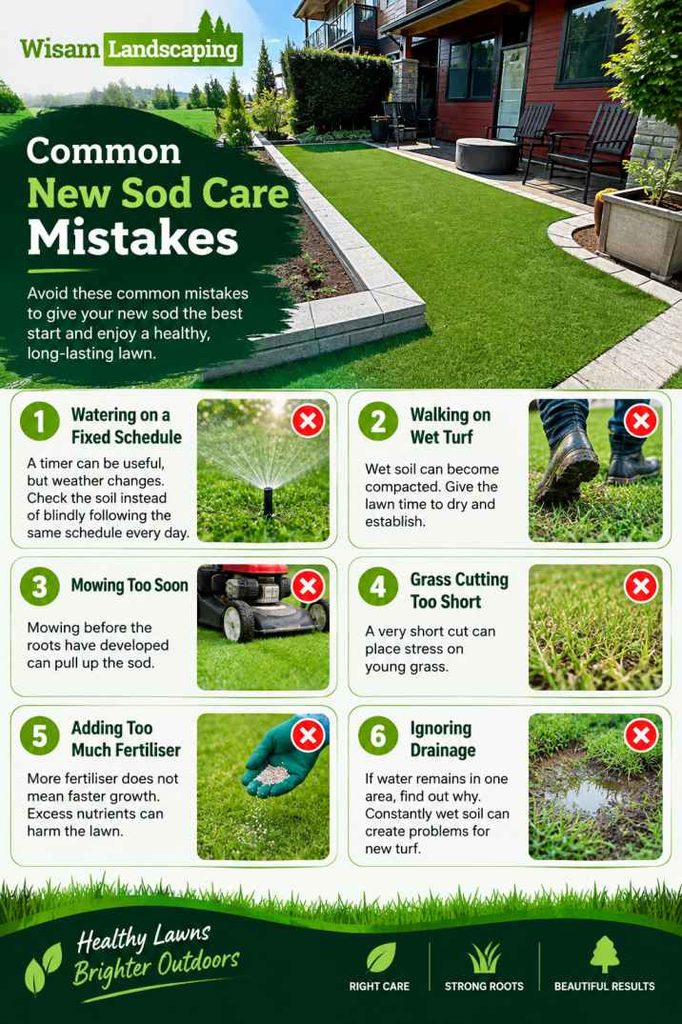
Here are some common mistakes to avoid:
A timer can be useful, but weather changes. Check the soil instead of blindly following the same schedule every day.
Wet soil can become compacted. Give the lawn time to dry and establish.
Mowing before the roots have developed can pull up the sod.
A very short cut can place stress on young grass.
More fertiliser does not mean faster growth. Excess nutrients can harm the lawn.
If water remains in one area, find out why. Constantly wet soil can create problems for new turf.
Keeping track of the first month can make things easier.
| Period | Main Focus |
| Days 1–2 | Keep sod and soil moist |
| Days 3–7 | Check moisture regularly |
| Days 8–14 | Watch for root development |
| Days 15–21 | Gradually adjust watering |
| Days 22–30 | Prepare for normal maintenance |
This is only a general guide. Your actual routine should respond to the grass, soil, weather, and installation conditions.
Good aftercare starts with good installation. During sod installation in Vancouver, the soil should be prepared properly before the turf is laid. The ground should provide suitable contact for the sod roots. Inadequate soil preparation, improper levelling, or drainage concerns may complicate aftercare.
For this reason, it would be beneficial to consult on watering and aftercare before installation commences. Find out what kind of sod was used and the care required during its first month.
Most newly installed lawns will require ongoing care. However, there are instances when seeking help early is the way to go.
This is the case if you spot:
Do not wait for a small problem to cover the entire lawn. Early advice can save time and may prevent further damage.
The first 30 days can make a big difference to a new lawn. Keep the soil moist, avoid heavy foot traffic, watch the weather, and give the roots time to develop. Do not worry about following a complicated routine. Check the lawn regularly and respond to what you see. For Sod Installation in Vancouver, you can get in touch with Wisam Landscaping.
New Sod care is mostly about consistency. With proper watering, sensible mowing, and a little patience, fresh sod can develop into a strong and attractive lawn.
New sod usually needs frequent moisture checks during the first week. The exact watering schedule depends on weather, soil, turf type, shade, and rainfall. Check the soil before watering.
Foot traffic should be reduced during the initial few weeks. Allow the sod time to root before you use the lawn normally.
Never mow according to the number of days after installation. Wait until the sod has rooted well and is in the growth stage. The mower should not pull or move the sod.
Yes, it is possible. Overwatering the new sod will cause the soil to stay soggy all the time. Waterlogging is an issue that should be avoided at all costs. A soil check should be done before watering.
A soil check is necessary before you determine the cause of browning. Several issues could cause browning, such as inadequate watering, heat, poor installation, pests, or disease.