
Choosing between artificial grass and natural grass often comes down to more than appearance. Homeowners want a lawn that looks good, handles everyday use, and does not turn into another demanding job every weekend.
That is where maintenance becomes an important part of the decision.
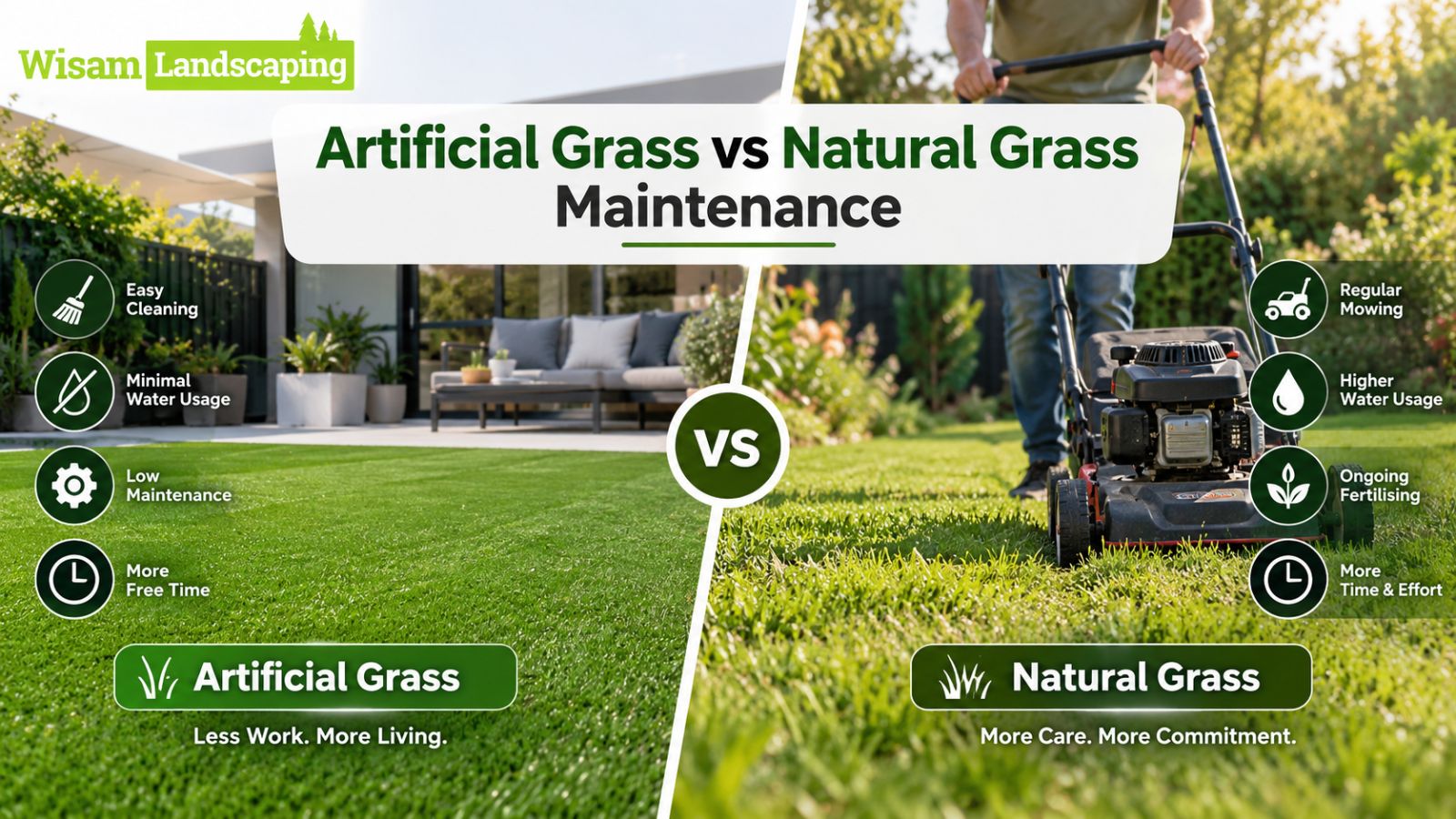
Natural grass can create a beautiful, living outdoor space, but it requires regular mowing, watering, feeding, trimming, weed management, and seasonal attention. Artificial Grass Maintenance, on the other hand, is generally more about keeping the surface clean, removing debris, brushing the fibres, and dealing with occasional weeds or stains.
But does artificial turf always save time?
Not necessarily.
The answer depends on how the lawn is used, the surrounding landscape, local weather, pets, drainage, tree cover, and how well the installation was completed. A poorly installed synthetic lawn can create its own maintenance problems, while a well-planned natural lawn may be surprisingly manageable.
This guide looks closely at Artificial Grass vs Natural Grass Maintenance, so you can compare the practical workload rather than simply choosing based on appearance.
The biggest difference is simple: one is a living plant system and the other is a manufactured surface designed to imitate grass.
Natural grass continues to grow. That means maintenance is partly about managing growth and keeping the plants healthy.
Artificial grass does not grow, so there is no mowing or fertilising in the traditional sense. However, it still needs care. Dust, leaves, mud, pet waste, pollen and other debris can accumulate on the surface.
A typical maintenance comparison looks like this:
| Maintenance Task | Natural Grass | Artificial Grass |
|---|---|---|
| Mowing | Regularly required | Not required |
| Watering | Usually required | Occasional cleaning |
| Fertilising | Often required | Not required |
| Edging | Periodic | Occasional |
| Weed Control | Regular consideration | Usually occasional |
| Brushing | Sometimes useful | Periodically recommended |
| Leaf Removal | Required | Required |
| Pest Management | May be required | Usually limited |
| Pet Waste Cleaning | Required | Required |
| Reseeding/Repair | Sometimes required | Occasional repairs |
The important point is that Artificial Grass Maintenance does not mean zero maintenance. It means a different type of maintenance.
For many homeowners, the biggest time commitment associated with natural grass is routine Lawn Care.
A natural lawn can require attention throughout the growing season. Mowing frequency depends on grass type, rainfall, temperature, soil conditions and growth rate.
Then there is everything around mowing.
You may need to:
None of these jobs is particularly difficult on its own. The issue is repetition.
A lawn can look excellent immediately after mowing, but it does not stay that way indefinitely. Growth continues, which means the maintenance cycle starts again.
One common mistake is assuming that natural grass requires the same care throughout the year.
It does not.
Growth patterns change with temperature, rainfall and sunlight. During active growth periods, mowing may become more frequent. During dry conditions, irrigation can become a major consideration.
This is where homeowners sometimes underestimate the time involved.
The lawn itself may take only a short period to mow, but preparing equipment, moving furniture or garden items, edging, cleaning equipment and dealing with clippings can turn a quick job into a more involved routine.
The strongest time-saving argument for Synthetic Turf is that its surface does not require mowing or routine fertilisation.
Once properly installed, artificial turf can eliminate several repetitive jobs associated with natural grass.
There is no need to:
For a busy household, that difference can be significant.
Imagine a homeowner who spends part of the weekend maintaining a natural lawn. Over several months, those individual maintenance sessions add up.
With artificial turf, the routine is generally more straightforward. Leaves can be blown or raked away. Dirt can be removed. The fibres may need brushing to restore their appearance after heavy use.
That is a very different workload from managing living grass.
A well-installed artificial lawn typically needs practical surface care rather than horticultural maintenance.
This can include:
The exact maintenance requirements depend on the product, infill system, installation and environment.
A lawn underneath large trees, for example, may require more frequent debris removal than one in an open garden.
Water Usage is another area where the maintenance workload can differ considerably.
Natural grass generally needs water to remain healthy, particularly when rainfall is insufficient. The amount required depends on climate, grass species, soil, exposure and irrigation practices.
Artificial grass does not need watering to grow.
That can reduce routine irrigation work and may also reduce the amount of water used specifically for lawn growth.
However, artificial turf may still be rinsed occasionally. This is especially useful where dust accumulates or where pets use the lawn.
The distinction is important:
Natural grass uses water for growth and health. Artificial grass may use water for cleaning.
That does not mean every artificial lawn automatically uses less water overall. The surrounding garden still matters. Trees, garden beds and other plants may continue to require irrigation.
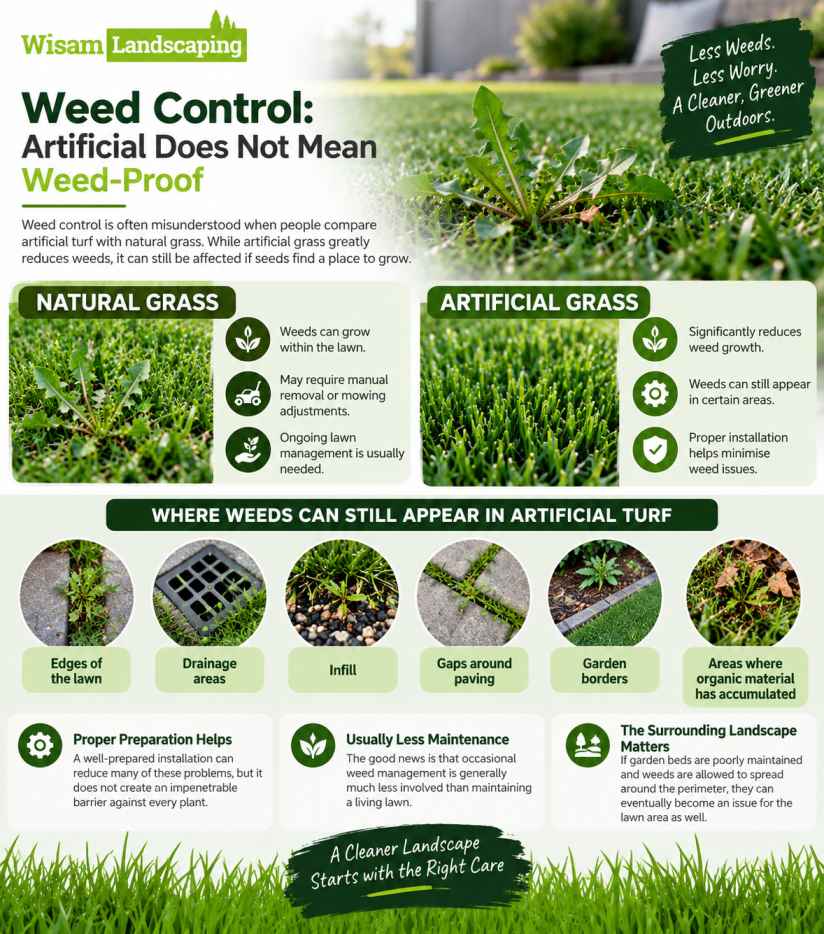
Weed Control is often misunderstood when people compare artificial turf with natural grass.
Natural grass lawns can develop weeds when unwanted plants establish themselves within the lawn or along its edges. Depending on the situation, homeowners may need manual removal, mowing adjustments, lawn improvement or other appropriate management methods.
Artificial turf significantly changes the situation, but weeds can still appear.
How?
Seeds can settle into:
A properly prepared installation can reduce many of these problems, but it does not create an impenetrable barrier against every plant.
The good news is that occasional weed management is usually much less involved than maintaining a living lawn.
The surrounding landscape also matters. If garden beds are poorly maintained and weeds are allowed to spread around the perimeter, those weeds can eventually become an issue for the lawn area as well.
When discussing Landscaping, it is easy to focus on the finished appearance and overlook what sits underneath the lawn.
That is a mistake.
Artificial turf depends heavily on proper preparation.
The base needs to be appropriately prepared and compacted, drainage needs to be considered, edges need to be secured, and the turf needs to be installed correctly.
Why does this matter for maintenance?
Because many apparent “turf maintenance” problems actually begin with installation.
For example, poor drainage can contribute to standing water. An unstable base can lead to uneven areas. Poorly secured edges may lift or separate. Incorrect joins can become visible or deteriorate over time.
A homeowner may then spend time fixing problems that could have been prevented during installation.
This principle applies to both natural and artificial lawns.
A well-designed garden considers:
The lawn should not be treated as an isolated rectangle.
For example, positioning artificial turf beneath trees may look attractive, but falling leaves and organic debris can increase cleaning requirements. Similarly, placing natural grass in an area that receives very little suitable sunlight can create ongoing lawn-health problems.
Good planning can save more time than any particular maintenance product.
For households with dogs, lawn maintenance becomes slightly different.
A Pet-Friendly Lawn needs to cope with urine, waste, digging, running, scratching and repeated traffic.
Natural grass can become worn in high-use areas. Dog urine can also contribute to discolouration or damaged patches in some lawns. Repeated running can compact soil and create muddy or bare areas.
Artificial grass avoids some of these problems because it does not die from ordinary foot traffic in the same way living grass does.
However, pet owners should pay close attention to cleaning and drainage.
Solid waste should be removed promptly. The surface may need rinsing, particularly in areas used frequently by pets. Drainage needs to be suitable so liquids do not remain trapped beneath the surface.
Artificial turf is therefore not “maintenance-free” for pets. It simply shifts the maintenance from growing and repairing grass to cleaning and hygiene.
A sensible artificial grass maintenance routine does not need to be complicated.
The frequency should depend on how the lawn is used.
For a lawn with limited foot traffic, routine care may focus on:
A busy household may need to brush the turf more regularly because repeated walking and play can flatten fibres.
Furniture can also leave temporary impressions.
Moving furniture periodically and brushing high-use areas can help maintain an even appearance.
Pet-use areas generally need more frequent cleaning.
A practical routine may include:
The objective is not to spend hours maintaining the lawn. It is to prevent small problems from becoming larger ones.
This is probably the most common misconception.
Artificial turf does not grow, but it still collects dirt and debris. Leaves can accumulate. Fibres can flatten. Pet areas need cleaning.
Think of it as low-maintenance rather than maintenance-free.
Natural grass can look fantastic, but the maintenance workload should be considered before installation.
Ask yourself how much time you realistically want to spend mowing, watering, edging and managing the lawn.
A lawn that looks perfect in a landscaping photograph may not fit your available time.
An artificial lawn surrounded by unmanaged trees and garden beds can still require substantial cleaning.
Likewise, natural grass next to poorly designed drainage can develop problems regardless of how carefully it is maintained.
The entire outdoor space should be considered.
Drainage matters for both lawn types.
For artificial turf, poor drainage can affect cleanliness, odour and surface usability. For natural grass, excessive water can contribute to unhealthy soil and poor turf growth.
Different turf products have different fibre structures, backing systems and infill requirements.
Maintenance requirements can therefore vary.
It is sensible to understand the product specifications and follow the manufacturer’s maintenance recommendations rather than applying one generic routine to every artificial lawn.
For most homeowners, artificial grass will save more routine lawn-maintenance time, particularly when compared with a natural lawn that requires frequent mowing and watering.
The biggest time savings usually come from eliminating repetitive growth-related tasks.
Artificial turf does not need to be:
Natural grass, meanwhile, can require ongoing attention throughout its growing cycle.
But “saves the most time” is not the same as “is always the better option.”
Natural grass may be preferable for homeowners who enjoy gardening, want a living landscape, or have conditions that suit healthy turf growth. Artificial grass can be attractive to people who prioritise a consistent appearance and want to reduce repetitive lawn work.
The right decision depends on how you actually use your garden.
Before deciding, consider these practical questions.
If the area receives heavy family traffic, artificial turf may provide a more consistent surface with less concern about worn grass.
If mowing, gardening and maintaining plants are activities you enjoy, natural grass may not feel like a burden.
For someone who sees mowing as a chore, however, removing that task can make a noticeable difference.
Consider waste management, drainage, durability and cleaning requirements rather than simply choosing based on appearance.
Look at the whole property rather than the lawn alone.
Replacing natural grass with artificial turf may reduce lawn irrigation, but garden beds and plants may still need water.
Ask what the lawn will require after installation, not just how it will look on the first day.
That question can reveal more about the practical suitability of the option than the initial appearance.
Whether you choose natural grass or artificial turf, a few basic habits can reduce future work.
Deal with small problems early. A small damaged edge, blocked drainage point or persistent bare patch is easier to address before it becomes a larger problem.
Keep surrounding areas tidy. Leaves and organic debris from nearby trees can increase maintenance for any lawn.
Avoid unnecessary wear. Repeatedly dragging heavy furniture or equipment across artificial turf can damage or flatten fibres.
Use appropriate equipment. Follow product recommendations for brushes, cleaning products and maintenance tools.
Do not overwater natural grass. More water does not automatically mean healthier grass. Irrigation should suit the lawn, soil and conditions.
Inspect drainage periodically. Water should move away effectively rather than remaining where it can cause problems.
Follow manufacturer recommendations for artificial turf. Different turf systems can have different cleaning and brushing requirements.
Artificial grass may make particular sense when your priority is reducing routine lawn work.
It can be a practical option for:
It is especially useful when the homeowner’s main complaint is not gardening itself, but the repetitive nature of lawn maintenance.
Natural grass should not be dismissed simply because it requires more maintenance.
A healthy living lawn offers a genuine natural landscape experience. It can complement established gardens and work particularly well where the site has appropriate sunlight, soil, drainage and irrigation.
For homeowners who enjoy gardening, the maintenance may also be part of the experience rather than an unwanted task.
The question is therefore not simply, “Which lawn is better?”
A more useful question is:
“Which lawn gives me the outdoor space I want without creating a maintenance routine I will struggle to keep up with?”
That is the question that leads to a more practical decision.
The real difference between artificial and natural lawns is not simply how they look. It is how they fit into your routine.
Natural grass is a living landscape that rewards regular care but continues to grow whether you have time for it or not. Artificial turf offers a more consistent surface and removes several repetitive tasks, but it still benefits from sensible cleaning, brushing and inspection.
When comparing Artificial Grass vs Natural Grass Maintenance, think beyond the initial installation. Consider mowing frequency, Natural Grass Maintenance, Water Usage, Weed Control, pets, foot traffic, drainage and the amount of time you realistically want to spend maintaining your garden.
For homeowners whose main priority is reducing repetitive lawn work, artificial grass can be a strong time-saving option. For those who enjoy gardening and want a living landscape, natural grass may be worth the additional effort.
At Wisam Landscaping, the most useful approach is to look at the entire outdoor space rather than choosing a lawn based on appearance alone. The right solution should suit the property, the people using it and the level of maintenance you are genuinely prepared to manage.
No. Artificial Grass Maintenance is generally much simpler than maintaining living grass, but the surface still needs occasional care. Leaves, dirt and other debris should be removed, heavily used areas may need brushing, and spills or pet waste should be cleaned. Drainage and edges should also be inspected periodically. The major difference is that artificial grass does not require mowing, fertilising or regular irrigation for growth.
Artificial grass does not require watering to stay alive because it is not a living plant. However, occasional rinsing can be useful for removing dust, pollen, dirt or residues, especially in pet-use areas. How often this is needed depends on the environment and how the lawn is used. Natural grass, by comparison, needs sufficient water to maintain healthy growth when rainfall does not provide enough moisture.
Natural grass generally requires more ongoing weed management because weeds can grow directly within the soil and lawn environment. Artificial turf can still experience weeds around edges, drainage areas or where organic material accumulates, but the problem is usually more limited. Good installation and keeping surrounding garden areas under control can reduce weed-related maintenance for synthetic turf.
It can be, provided the product and installation are suitable for pet use. The important factors include effective drainage, regular removal of solid waste, appropriate cleaning and sufficient ventilation or drainage through the system. Artificial turf can avoid some of the worn or muddy patches associated with heavily used natural grass, but pet owners should not treat it as a completely maintenance-free surface.
For most homeowners focused specifically on routine maintenance, artificial grass can save considerable time because it eliminates mowing and reduces tasks such as watering for growth, fertilising and repairing worn grass. However, the exact time savings depend on the lawn’s size, surrounding vegetation, traffic and use. Artificial Grass vs Natural Grass Maintenance should therefore be assessed according to your property’s conditions and your own willingness to perform regular lawn care.