

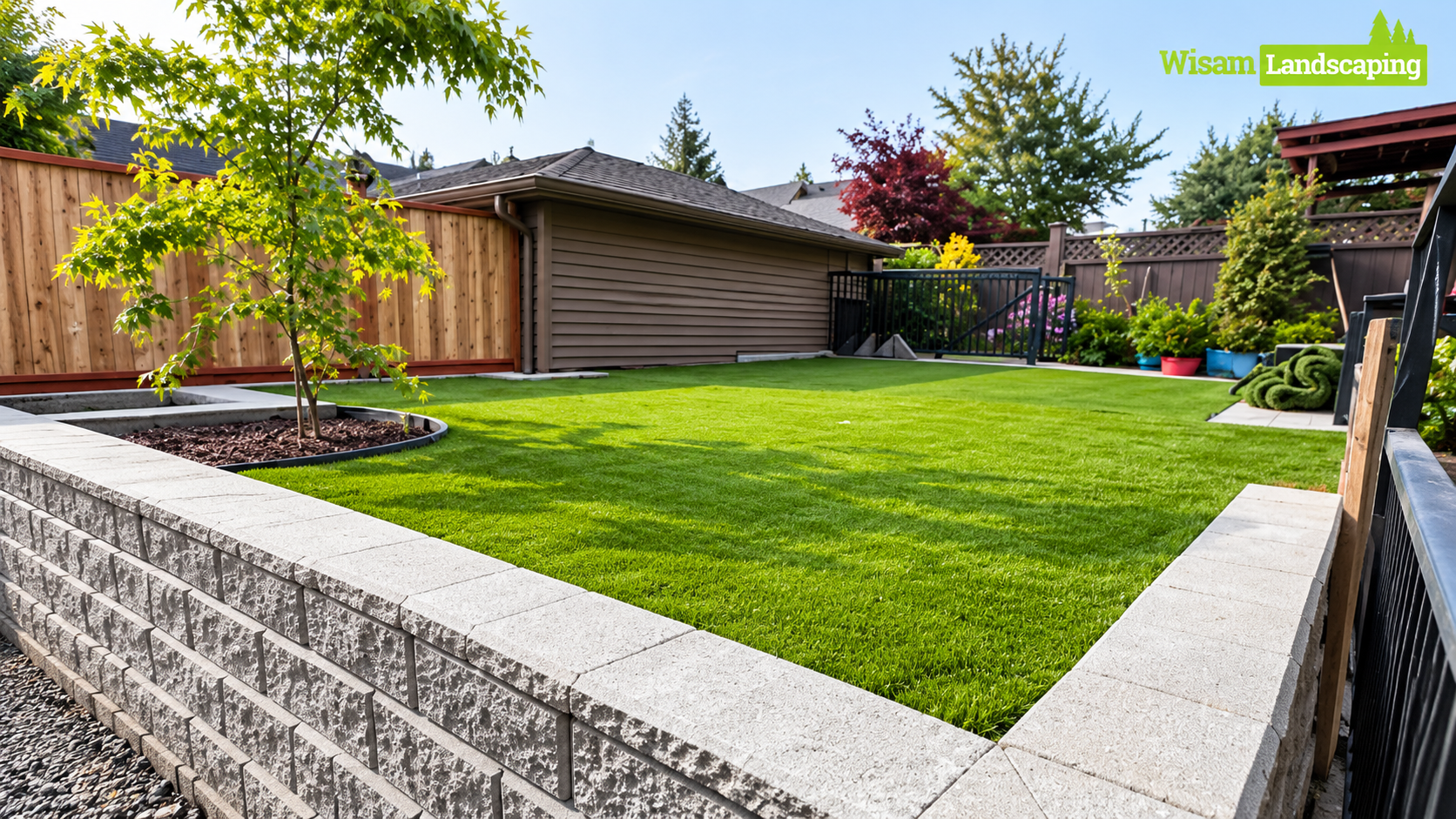
A beautiful yard should not feel like another full-time responsibility. For busy homeowners, the challenge is finding a landscape that looks intentional and welcoming without demanding hours of watering, pruning, mowing, weeding, and seasonal maintenance. The best Low Maintenance Landscaping Ideas focus on working with the property rather than constantly fighting its natural conditions. With the right plant selection, hardscape materials, ground covers, and layout, homeowners can create an attractive outdoor space that requires less ongoing attention while still supporting everyday enjoyment and long-term value.
Low maintenance does not mean maintenance-free. Every living landscape needs some level of care, and even synthetic or hardscaped areas require occasional cleaning, inspection, and repair. The goal is to reduce unnecessary work by selecting elements that are suited to the site and designing them efficiently.
For example, a garden filled with plants that require frequent pruning may look impressive initially but become demanding as they mature. A landscape using appropriately sized shrubs, perennial plants, mulch, durable pathways, and well-planned planting zones can provide a similar visual impact with considerably less intervention.
For Vancouver homeowners, this distinction is particularly important. Local landscapes need to cope with wet seasons, changing temperatures, summer dry periods, shade from buildings and mature trees, and varying soil conditions. Landscape Design in Vancouver should therefore account for the actual microclimate and drainage characteristics of a property instead of simply copying a landscape seen elsewhere.
Drought-Tolerant Plants are one of the most practical choices for homeowners who want to reduce regular watering. However, drought tolerance does not mean a plant can survive without water immediately after installation. Newly planted vegetation still needs appropriate establishment care while its root system develops.
Once established, suitable drought-tolerant species can require less supplemental irrigation, particularly when planted in locations that match their sunlight and soil requirements. The important lesson from practical landscape planning is to choose plants based on the conditions they will actually experience.
Instead of selecting plants because they look attractive at a garden centre, consider:
Grouping plants with similar water requirements can make irrigation more efficient and prevent one area from being overwatered simply because another plant needs more moisture.
Mulching is one of the simplest ways to reduce recurring garden maintenance. A suitable layer of organic or inorganic mulch can help suppress weed growth, moderate soil temperatures, reduce evaporation, and make planting beds look tidier.
Organic options such as arborist wood chips, bark, or compost-based materials can gradually break down and contribute organic matter to the soil. Inorganic options, including certain decorative stones, can have different maintenance characteristics and may be useful in particular planting schemes.
Mulch should not be piled directly against tree trunks or plant stems. Excessive depth can also create problems rather than solve them. The practical approach is to use an appropriate depth for the material and refresh it when necessary instead of continually adding new layers.
Complexity is often the hidden cause of maintenance. Every additional planting bed, narrow border, unusual material transition, or small isolated lawn area creates another place that needs attention.
A simpler Landscaping layout can actually look more sophisticated because it creates visual consistency. Larger planting zones, clearly defined edges, fewer unnecessary plant varieties, and practical access routes can make routine maintenance considerably easier.
For instance, a homeowner who currently has six small garden beds may spend more time trimming edges and moving equipment between them than someone with two larger, clearly defined beds. Consolidating planting areas during a renovation can therefore reduce maintenance without reducing the amount of greenery.
A traditional lawn can be useful for children, pets, recreation, and open visual space, but it is also one of the landscape elements that can require regular attention. Mowing, edging, fertilizing, watering, aerating, and repairing worn sections can become time-consuming.
Reducing unnecessary lawn does not mean eliminating it completely. Instead, think about how much lawn the household actually uses. A smaller, purposeful lawn surrounded by planting beds, pathways, or seating areas can often be more practical than a large expanse that serves primarily as visual space.
This approach can also create opportunities for more functional Outdoor Living areas, particularly where a portion of the existing lawn receives little use.
Artificial Grass can be useful where homeowners want the visual character of turf without routine mowing and regular watering. It can work particularly well in selected areas that experience heavy foot traffic or where natural grass struggles because of shade, drainage, or repeated use.
However, artificial turf is not automatically the best choice for every property. Quality varies, installation requires careful preparation, and the surface still needs occasional cleaning and maintenance. Drainage beneath the installation is especially important.
Homeowners should also consider heat, pets, children, aesthetics, expected lifespan, and the surrounding landscape before choosing synthetic turf. Used selectively, it can be a practical component of a lower-maintenance landscape rather than a universal replacement for living vegetation.
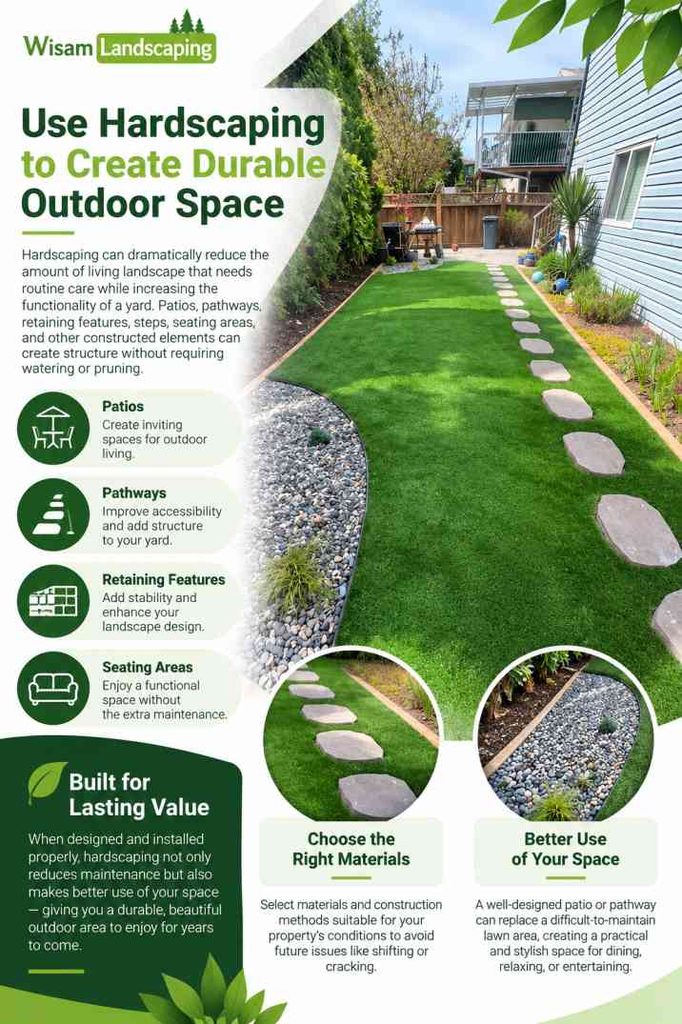
Hardscaping can dramatically reduce the amount of living landscape that needs routine care while increasing the functionality of a yard. Patios, pathways, retaining features, steps, seating areas, and other constructed elements can create structure without requiring watering or pruning.
The key is to select materials and construction methods suitable for the property’s conditions. Poor drainage, inadequate base preparation, or incorrectly installed surfaces can lead to shifting, settlement, cracking, moss growth, and other maintenance problems.
A well-designed patio, for example, can replace a difficult-to-maintain patch of lawn while creating a practical place for outdoor dining. The result is not simply less maintenance; it is better use of the available space.
One of the most common causes of unnecessary landscape maintenance is planting something in the wrong place. A shrub may look appropriately sized when purchased but become several times larger as it matures.
When plants outgrow their allocated space, homeowners may need to prune them repeatedly, move them, or remove them entirely. These interventions can be avoided by considering the mature height and width before installation.
An experienced approach to Landscape Design considers the plant’s eventual size rather than designing around its nursery-container appearance. Allowing sufficient space between plants may initially make a garden look sparse, but it usually produces a healthier and easier-to-maintain landscape as everything develops.
A Backyard should reflect how the household actually lives. If the family enjoys entertaining, a durable seating or dining area may provide more value than additional planting beds. If children need open space, retaining some lawn may make more sense than replacing it with ornamental landscaping.
Think about the activities that happen outdoors and design around them. A practical backyard might combine a modest lawn, low-maintenance planting, a patio, shade, pathways, and screening vegetation.
This approach prevents a common mistake: installing an attractive landscape that does not suit the homeowner’s lifestyle. The best low-maintenance landscape is not simply the one requiring the least work; it is the one that delivers the most useful outdoor space for the amount of care available.
Reducing maintenance does not necessarily mean removing irrigation. In many landscapes, an appropriately designed irrigation system can save time by delivering water consistently to areas that need it.
Drip irrigation can be useful for certain planting beds because water is delivered close to the root zone rather than broadly across the landscape. Smart controllers may also help adjust irrigation according to weather and seasonal conditions.
Irrigation should nevertheless be designed around the plants and site rather than used to compensate for poor plant selection. A landscape filled with plants that need significantly more water than the property naturally provides will remain demanding regardless of how sophisticated the irrigation system is.
Evergreen shrubs and trees can provide consistent structure without requiring homeowners to repeatedly replace seasonal plants. They can also contribute to privacy screening, wind protection, and visual continuity.
The important consideration is variety and scale. Planting the same evergreen species repeatedly can create disease or pest vulnerabilities and may produce an overly uniform appearance. Combining appropriate evergreen structure with selected deciduous plants, ornamental grasses, and durable ground covers can create seasonal interest while keeping the overall maintenance burden manageable.
Bare soil between plants quickly becomes an invitation for weeds. Ground-cover plants can occupy those spaces, helping reduce exposed soil while creating a more cohesive planting design.
Ground covers should be selected carefully because some species can spread aggressively or become difficult to control. The right choice depends on sunlight, soil, moisture, foot traffic, and the desired appearance.
A properly established ground-cover area can reduce the need for constant hand weeding. Combined with appropriate Mulching, it can make planting beds substantially easier to manage during the growing season.
Sustainable Landscaping is not simply about using environmentally friendly materials. It involves creating a landscape that works efficiently with local conditions and requires fewer unnecessary resources over time.
That can include selecting suitable plants, improving soil health, managing stormwater, reducing excessive lawn areas, choosing durable materials, protecting existing mature trees, and avoiding unnecessary irrigation.
For Vancouver properties, thoughtful stormwater management can be especially useful. Rather than directing every drop of rainwater away from the landscape as quickly as possible, certain designs can help manage water through appropriate grading, planting, permeable surfaces, and drainage strategies.
A Garden border can look polished without requiring dozens of different plant species. Repeating a smaller selection of compatible plants often creates a stronger visual rhythm and simplifies maintenance.
Use taller plants toward the back, medium-height varieties through the middle, and lower-growing plants toward the front where appropriate. This makes the planting easier to understand visually and can reduce the need to constantly rearrange or replace plants.
A smaller plant palette also makes seasonal care easier because homeowners become familiar with how each species grows and what maintenance it actually needs.
Maintenance becomes significantly easier when the landscape has been designed for access. Garden beds that are too wide can make pruning or weeding difficult. Dense planting around fences can create awkward working conditions. Narrow spaces between structures may prevent equipment from reaching areas that need attention.
During the design stage, think about where a person will stand while pruning, where garden waste will be carried, how irrigation can be inspected, and where outdoor equipment will move.
These details are rarely visible in photographs of completed landscapes, but they make a substantial difference in everyday ownership. Good design considers not only how the garden looks on installation day but also how someone will care for it years later.
One of the most effective Low Maintenance Landscaping Ideas is to combine living elements with durable constructed surfaces rather than relying exclusively on either one. Plants provide softness, seasonal change, habitat, and visual interest, while hardscape areas provide stability and usable space.
A balanced design might include drought-tolerant planting, mulch, a compact lawn or artificial grass area, a paved walkway, a patio, and carefully selected shrubs. This creates visual variety while distributing maintenance requirements across different landscape elements.
The result should feel natural rather than overly engineered. Low maintenance is successful when the landscape remains attractive, useful, and healthy without requiring constant intervention from the homeowner.
The phrase “low maintenance” can sometimes lead homeowners toward choices that appear convenient but create problems later. One common mistake is choosing plants solely because they are labelled drought-tolerant without checking whether they suit the property’s soil, sunlight, or drainage.
Another is assuming that artificial grass or large areas of paving require absolutely no maintenance. Both can need cleaning, inspection, and occasional repairs. Poorly installed hardscape can also become more demanding than the lawn it replaced.
Overplanting is another frequent issue. Small plants need room to mature, and filling every available gap during installation can result in overcrowding within a few years. A professional design should account for growth rather than trying to make every planting area look completely full on day one.
The most useful advice is to think about maintenance before selecting individual features. Walk through the property and identify which tasks currently consume the most time. If mowing is the problem, reduce unnecessary lawn. If watering is difficult, reassess plant selection and irrigation. If weeds dominate, improve ground coverage and mulching.
It is also worth separating establishment maintenance from long-term maintenance. Newly installed landscapes generally require more attention while plants establish roots and materials settle. The objective is to reach a point where routine care becomes predictable rather than eliminating every maintenance task.
For larger properties, consider creating a simple seasonal maintenance schedule. Spring may involve pruning and inspection, summer may require irrigation management, autumn can involve leaf management, and winter may be focused on drainage and structural checks. Small, planned tasks are usually easier to manage than major corrective work after problems have developed.
Local conditions should influence every major landscaping decision. A landscape designed for another climate may not perform as expected in Vancouver, even if it looks attractive in photographs. Plant selection, drainage, soil, sunlight, exposure, and seasonal moisture all affect long-term performance.
Good Landscape Design in Vancouver should therefore balance aesthetics with practical site conditions. The designer should consider how plants will mature, where water will move, how hardscape will be used, and how the homeowner will realistically maintain the property.
This is particularly valuable for homeowners planning a significant renovation. Spending more time on design decisions before installation can prevent expensive changes later. A landscape should be evaluated as a living system that changes over time, not simply as a finished picture.
The best Low Maintenance Landscaping Ideas are not about creating an empty yard or replacing every living element with hard surfaces. They are about making deliberate choices that reduce unnecessary work while preserving beauty, usability, and environmental value. Appropriate plants, thoughtful mulching, efficient irrigation, practical hardscaping, manageable lawn areas, and site-specific planning can all contribute to a landscape that is easier to own.
For Vancouver homeowners, the strongest results come from treating landscaping as a long-term investment in how the property functions. Wisam Landscaping can be considered by homeowners who want to explore a landscape plan based on their property’s conditions, lifestyle, and maintenance priorities. The focus should remain on creating an outdoor environment that looks good today and continues to make sense as plants mature and the household’s needs evolve.
No. Even a carefully planned low-maintenance landscape requires some ongoing care. Plants need occasional pruning, irrigation systems need inspection, mulch may need replenishment, and hardscape surfaces need cleaning. The objective is to reduce repetitive or unnecessary tasks rather than eliminate maintenance entirely. A well-designed landscape makes these tasks more predictable and manageable while avoiding features that demand constant attention.
There is no single plant list that works for every Vancouver property because conditions vary significantly between sites. Sun exposure, soil, drainage, wind, moisture, and available space should all influence selection. In general, homeowners can explore appropriately suited drought-tolerant perennials, shrubs, ornamental grasses, and evergreen plants. The important step is matching each plant to its actual growing environment and mature size.
Artificial grass can be practical for selected areas where homeowners want a consistently green appearance and reduced mowing or watering. However, it should not be chosen solely because it is marketed as maintenance-free. Installation quality, drainage, cleaning, surface temperature, pets, children, and expected lifespan all deserve consideration. A hybrid landscape that uses artificial grass only where it solves a genuine problem can often be more practical than covering the entire yard.
Start by improving the way the existing landscape is organized. Group plants according to water and sunlight requirements, remove overcrowded or unsuitable species, add appropriate mulch, introduce useful ground covers, and reduce unnecessary lawn areas. You can also replace high-maintenance annuals with suitable perennials or shrubs. These changes can preserve the character of a green garden while reducing watering, pruning, weeding, and replacement work.
For a small garden refresh, homeowners may be able to handle many changes themselves. However, professional input can become valuable when a project involves grading, drainage, extensive hardscaping, irrigation, mature trees, retaining structures, or a complete landscape redesign. The greatest benefit is often the planning process: understanding site conditions, selecting appropriate materials and plants, and considering how the landscape will mature can prevent costly mistakes and reduce maintenance over the long term.